

「About Me and Maraysia」vol.1|OPK INTER-CORPORATION SDN.BHD.(OIC・Maraysia) DIRECTOR Kazuto Terasawa column
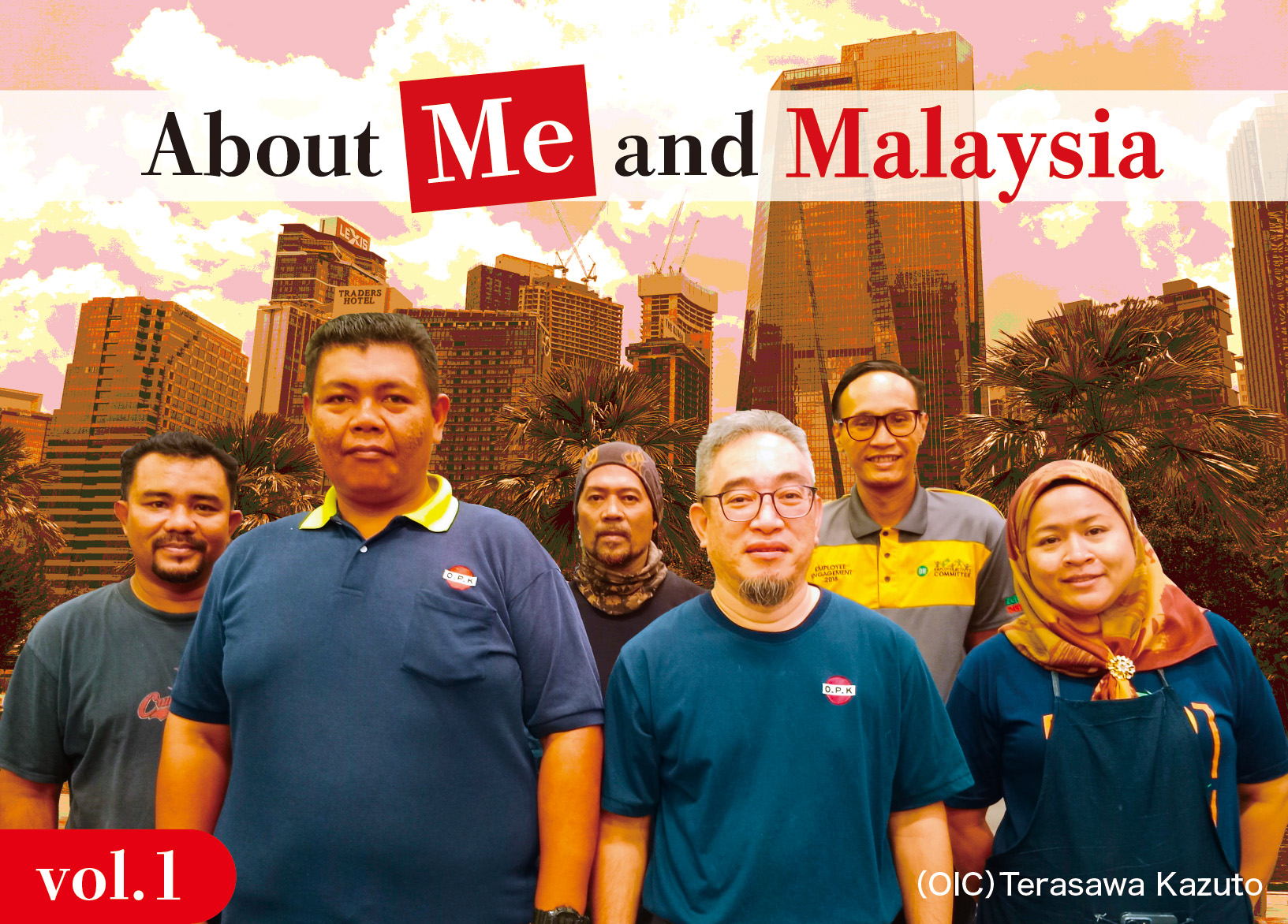
Hello everyone. I am Kazuto Terasawa, Director of OPK INTER-CORPORATION SDN. BHD. (OIC, Malaysia). I am currently serving as a locally hired director.
I am in charge of overall factory operations, including manufacturing, materials, imports, production engineering, and R&D. In addition, I am also involved in related areas such as government departments related to factory operations and procurement, as well as taxation, finance, and human resources.
In February 1998, at the age of 24, I was sent on a long-term assignment as an engineer to a subsidiary in Malaysia by Okudaya Giken Co., Ltd.
After joining the company and completing in-house training, I was assigned to work overseas in less than two years.
Some questioned, “Why would you send such a new employee to an overseas factory?” However, overseas factory work had been part of my employment terms from the time I joined the company. Although I do think it was a bit early, even for me, I remain deeply grateful to then-President Mr. Hitoshi Okuda and Mr. Ikemoto, Production Engineering Section Manager, for giving me the opportunity to be assigned to the overseas subsidiary.
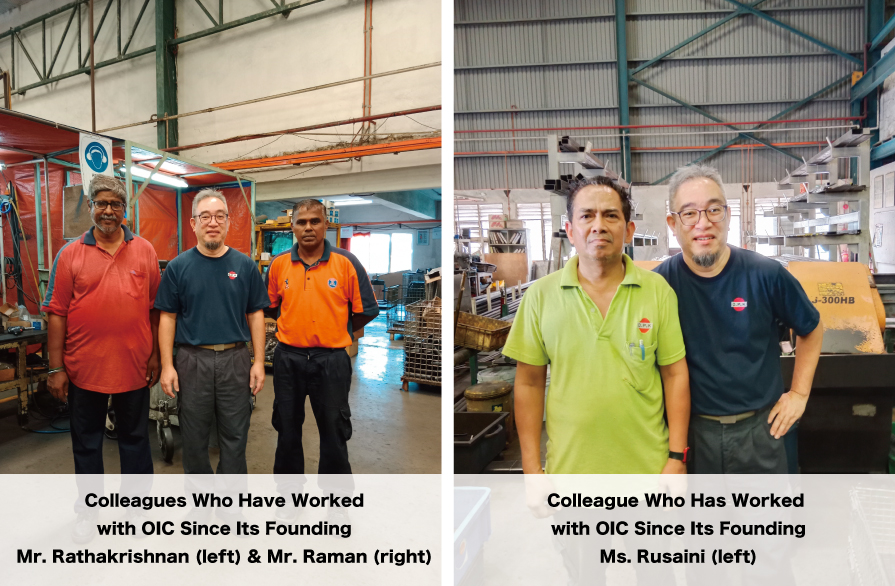
About 30 years ago, most nearby Japanese companies — from major corporations to small and medium-sized enterprises — were staffed mainly by highly experienced veterans in their 50s and 60s. Even those in their 40s were considered young, so at 24, I was regarded as a complete novice. People often remarked, “Your company sure is brave to send such an inexperienced youngster overseas.”
Connections among Japanese companies abroad were strong — almost like a close-knit community. There was a strong spirit of mutual assistance, which was essential for surviving in a foreign environment. Since regulations were more relaxed in those days, I would occasionally visit other companies to seek advice and learn things I didn’t know.
At that time, the internet was not yet widespread. There were only mobile phones—no smartphones, of course, and certainly no LINE. Communication with headquarters was conducted solely via phone and fax. It’s probably hard for people today to imagine such a setting. Even if I wanted to look something up, it was quite difficult without a reference book on hand.
Today, we can attend meetings online, receive technical guidance remotely, and even do research using email, photos, videos, and AI. It’s a completely different world—much more convenient! On the flip side, now it’s easy to be contacted anytime, anywhere (laughs).
Malaysia consists of 13 states and 3 federal territories. Among these, 9 states have Sultans, and these rulers take turns serving as the country’s King (Yang di-Pertuan Agong) every five years. Malaysia is a multicultural nation—home to Malays, Chinese, Indians, and indigenous peoples—each with its own way of life and religious practices. Malays and indigenous groups together make up more than 70% of the population.
The official language, as well as the language used in government documents, is Malay. However, in everyday life, many languages are spoken—English, Chinese dialects, Indian languages, and indigenous languages. Accordingly, in addition to national schools that use Malay, there are schools that teach in Chinese and Tamil, as well as homeschools and international schools. While Malaysia has domestic universities, many students also choose to pursue their studies abroad.
As for religion, Malaysia is home to a wide range of faiths, including Islam, Buddhism, Hinduism, Christianity, and indigenous beliefs. In this multicultural society, mutual respect and non-interference are deeply valued. Religion plays a central role in daily life, leading to many differences in lifestyle.
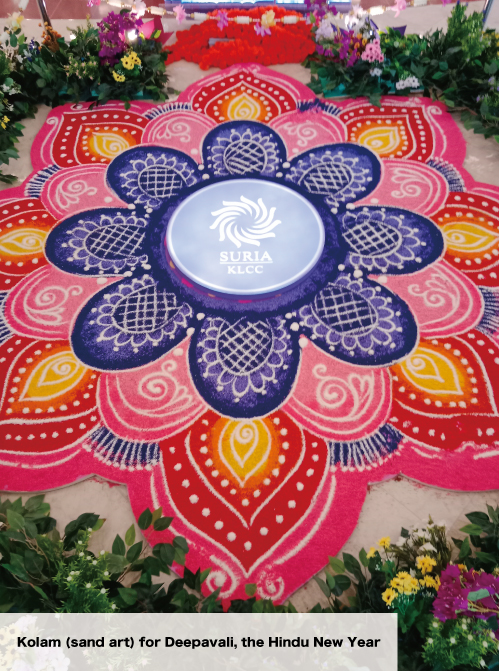
For example, when it comes to public holidays, each ethnic group has its own celebrations, and there are four major festive seasons similar to Japan’s New Year. As a result, it often feels like there’s always some kind of celebration happening throughout the year.
Compared to the past, Malaysia today has developed so much that I hardly feel any significant differences from Japan. Our company is located in Seremban, Negeri Sembilan, which is about an hour’s drive south of the capital, Kuala Lumpur. I live in the surrounding area.
Back then, there was only one Japanese restaurant, and it was located in a hotel. Now, including so-called “pseudo” Japanese restaurants, there are about ten. In addition to local Malay, Chinese, and Indian cuisine, you can now find restaurants serving Italian, Korean, and other international cuisines.
For shopping, we have AEON (a Japanese retail chain) and about eight hypermarkets — a retail format that originated mainly in Europe, featuring large-scale supermarkets in suburban areas. Online shopping is also very popular, making daily life far more convenient than in the past.
In Kuala Lumpur, in addition to the famous Petronas Twin Towers, there are numerous skyscrapers and condominiums. Just looking at that area, it feels like a major metropolis — possibly even larger than Osaka.
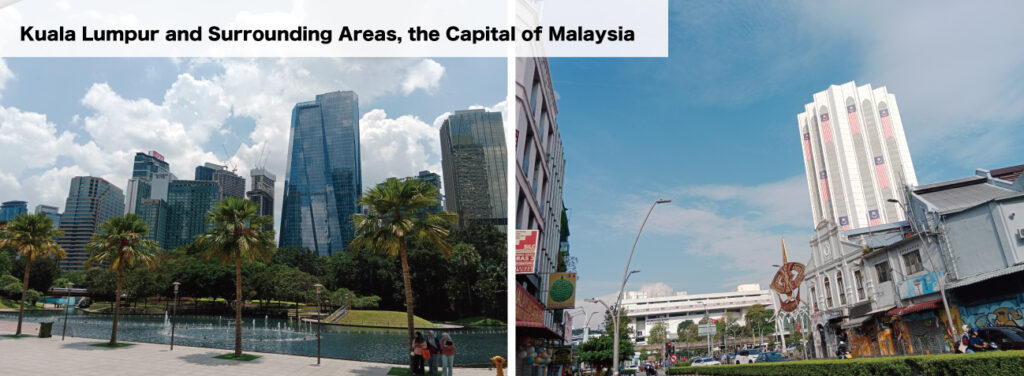
In the capital city, public transportation includes three MRT lines, two LRT lines, one monorail line, two KTM commuter lines, and one airport rail link. However, this system is still insufficient, and cars and motorcycles remain the primary modes of transportation. Traffic congestion during the morning and evening rush hours is quite severe.
As for the area where our company and I reside, the only available public transport is a bus that comes unpredictably, if at all. So, without a private vehicle, it would be virtually impossible to live a normal life here.
That’s all for today.
Next time, I will talk about “Working in Malaysia.”
Date of Contribution: November 2025
Author:
Kazuto Terasawa
Director
OPK INTER-CORPORATION SDN. BHD. (OIC)
(About Me and Malaysia – Vol. 1)

-
 Production Management Insights from Culinary Arts | Column by Lü Yafei, Manufacturing Department, Changzhou OPK Handling Equipment Co., Ltd.
-
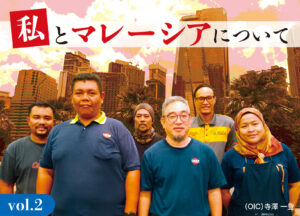
「About Me and Maraysia」vol.2|OPK INTER-CORPORATION SDN.BHD.(OIC・Maraysia) Column by Kazuto Terasawa, Director

Author of this article

Related articles
-
A Special Interview with General Manager Isogai: Why was the Brand Concept ‘CARRIER DESIGN’ Created?
-
Imprints of Time by the Pond
-
The Way We Work — Then and Now: A Look Back Over 25 Years
-
Album I Was Into Back Then: ④⊿(Perfume)
-
Department Introduction Article –Manufacturing Section 2, Self-Propelled & PL Frame Unit “Building the Foundation for Products in Motion”
-
The Front-Line Legend of the Strongest! The Ultimate Grip Strength Showdown of the Tough Guys!
-
Department Introduction “Production Engineering Section” – “To Be the ‘Reliable Engineering Section'”
-
Building Trust by Staying True to Ourselves ― Interview with Mr. Katsuki, General Manager of Sales Department