

「About Me and Maraysia」vol.2|OPK INTER-CORPORATION SDN.BHD.(OIC・Maraysia) DIRECTOR Kazuto Terasawa column
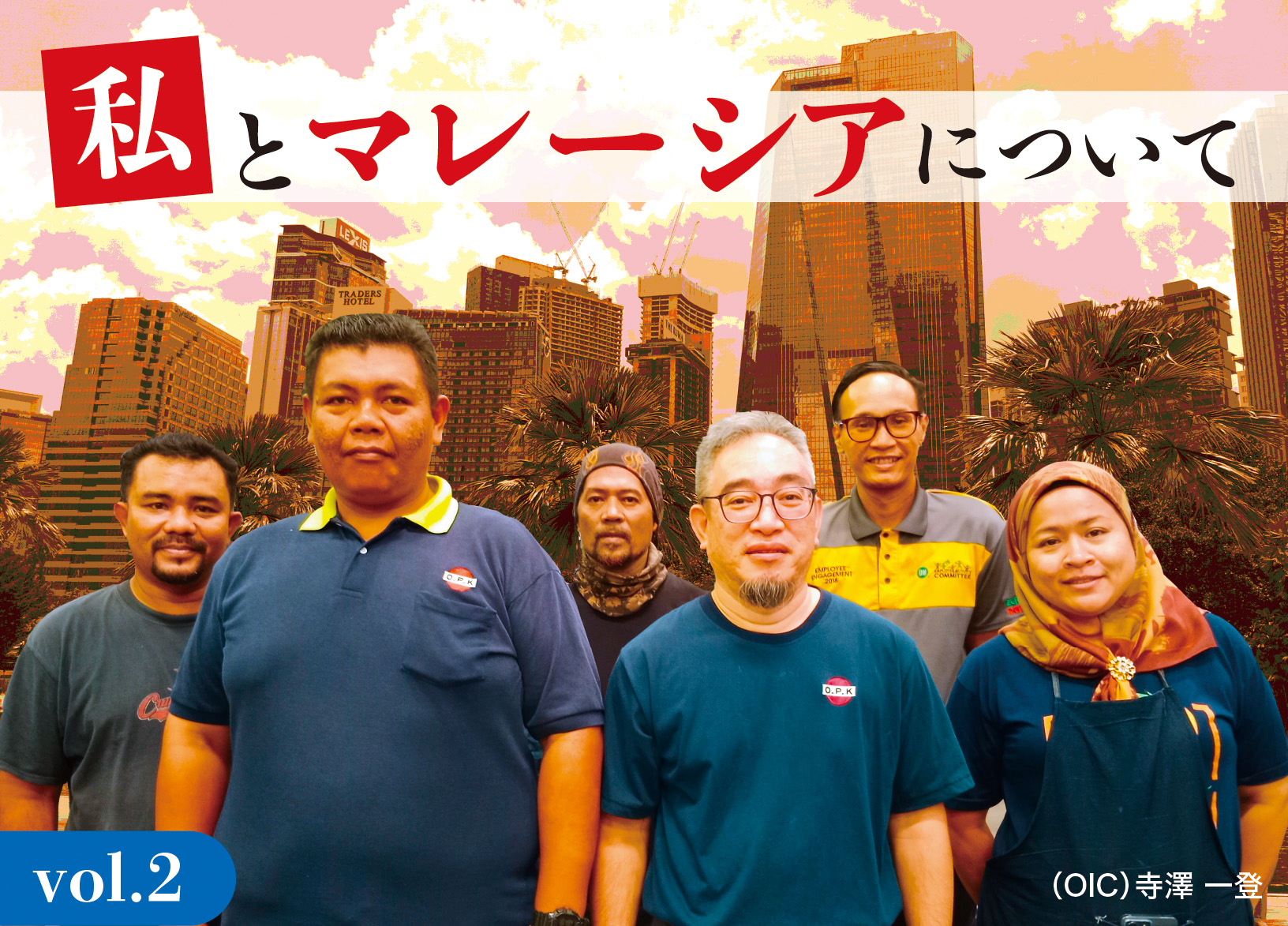
Hello everyone. Today, I’d like to talk about working in Malaysia.
Click here for ‘About Malaysia and Me’ Vol.1.
“Manufacturing in Malaysia”
We primarily use steel materials for our products. In Malaysia, there is one steel company equipped with a blast furnace, but due to quality issues, we are unable to use it. On the other hand, there are several companies operating electric furnaces, and our company sources from one of them.
Also, since there are multiple steel‑makers who import semi‑finished goods and then process them, our procurement method varies depending on the type of steel. However, because the variety is not as extensive as in Japan, we must select from a limited range of options that meet the specifications. If we still cannot find something suitable, we resort to importing.
Regarding subcontracting for vessel fabrication and machining: among the smaller metal processing enterprises we deal with in Malaysia, most currently do not have enough skilled workers or multiskilled operators.
Furthermore, Malaysia is a country with a strong sense of independence and an entrepreneurial spirit, so even when ordering the same parts as before, you may suddenly be told, “We can no longer manufacture this.” The cause often lies in the fact that the technician who supported the on-site operations has resigned.
Because dependence on individuals is so high, no matter how high-performing or expensive the equipment is, it is meaningless if there is no one who can fully utilize it. In fact, we have sometimes been approached by someone who resigned with comments like, “Since I have started my own company, why don’t we deal directly?” or “Could you transfer the purchasing to my new employer?”
“What I learned from negotiations”
This applies to existing suppliers as well, but especially in negotiations with new suppliers, a decision is expected on the spot. If in every meeting you say “I’ll take this back and discuss with headquarters before responding,” then you will be seen as either “a person without decision‑making authority” or “a person without the power to act.” Once that perception solidifies, even getting any meeting may become difficult.
Unlike in the past, the status of Japanese‑affiliated companies has also significantly declined. Previously, dealing with a Japanese company boosted your credibility, and you could learn about technology and quality control in the process. Even if the order volume was small, or the conditions were strict, or the price was tough, it was still a desirable partner. But now the overall level has risen, so there is less to gain — conversely, there are cases where working with a Japanese company is actively avoided.
A common remark is, “Japanese companies are NATO (No Action, Talk Only).” In other words, they come for a visit, talk a lot, but nothing ever starts — “what did they even come for?” To avoid this, it helps to anticipate multiple possible scenarios in advance: pre-discuss with headquarters what you will do in each case, define what you are unwilling to compromise on and what you can offer, and then negotiate with the supplier. Doing so reduces the number of “we’ll take it back” responses and allows the discussions to progress more smoothly.
“The importance of communication”
Internally, I especially feel that communication with each employee is very important. In Asian countries, ties with family and friends remain strong, and personal relationships carry significant weight. People also tend to be quite open, and information such as salaries or the performance of other employees spreads quickly.
It is quite normal for someone to say, “Why is my performance worse than that person’s? I have more good points.” In such cases, you need to explain why things are the way they are. If you manage to gain their understanding, you can turn it into a positive: “From now on, we’ll work on the points I mentioned, and then you will achieve a better result.” Of course, there are times when they are still not satisfied.
“Working as a team”
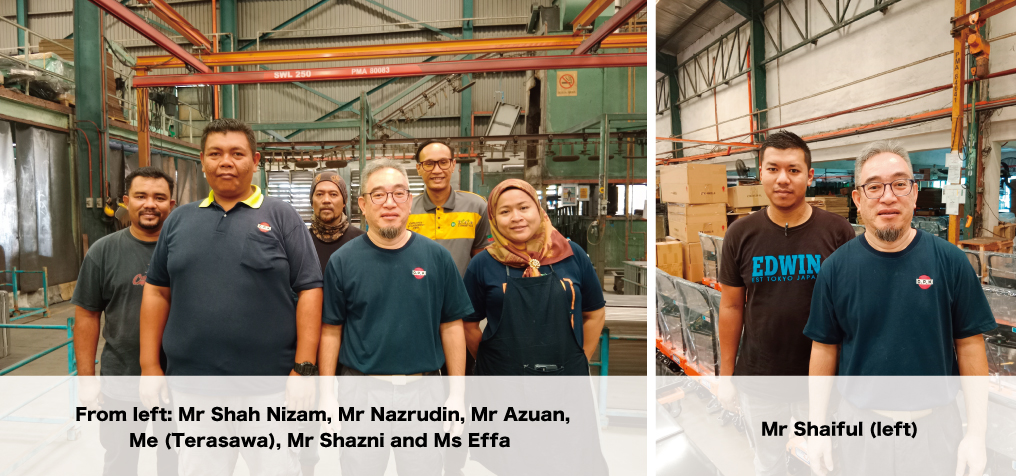
I am now the only Japanese working at this company and hardly ever have the chance to speak Japanese. At the start of our operations, three Japanese staff were dispatched from headquarters, but they returned to Japan one after another. This was because our original goal had been to “localize” the company’s operations.
Now, of course, our business partners are local companies, and even when dealing with Japanese firms, in most cases the contact person is a local national. Therefore, things have changed significantly. We are intentionally creating more opportunities for our local staff to engage directly with the partners.
My own role has also changed: from “me going out front” to “how can I reduce my direct involvement so that local talent can act proactively?”
Looking ahead, this leads us to human resource development — which is now my responsibility.
Date of Contribution: November 2025
Author:
Kazuto Terasawa
Director
OPK INTER-CORPORATION SDN. BHD. (OIC)
(About Me and Malaysia – Vol. 2)
-
 「About Me and Maraysia」vol.1|OPK INTER-CORPORATION SDN.BHD.(OIC・Maraysia) column by Kazuto Terasawa, DIRECTOR
-
Department Introduction Article – Sales Department (East Area)“Trust Begins on the Ground—with Sweat and a Smile.”


Author of this article

Related articles
-
A Special Interview with General Manager Isogai: Why was the Brand Concept ‘CARRIER DESIGN’ Created?
-
Imprints of Time by the Pond
-
The Way We Work — Then and Now: A Look Back Over 25 Years
-
Album I Was Into Back Then: ④⊿(Perfume)
-
Department Introduction Article –Manufacturing Section 2, Self-Propelled & PL Frame Unit “Building the Foundation for Products in Motion”
-
The Front-Line Legend of the Strongest! The Ultimate Grip Strength Showdown of the Tough Guys!
-
Department Introduction “Production Engineering Section” – “To Be the ‘Reliable Engineering Section'”
-
Building Trust by Staying True to Ourselves ― Interview with Mr. Katsuki, General Manager of Sales Department