

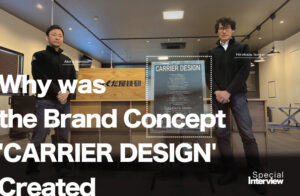
A Special Interview with General Manager Isogai: Why was the Brand Concept 'CARRIER DESIGN' Created?
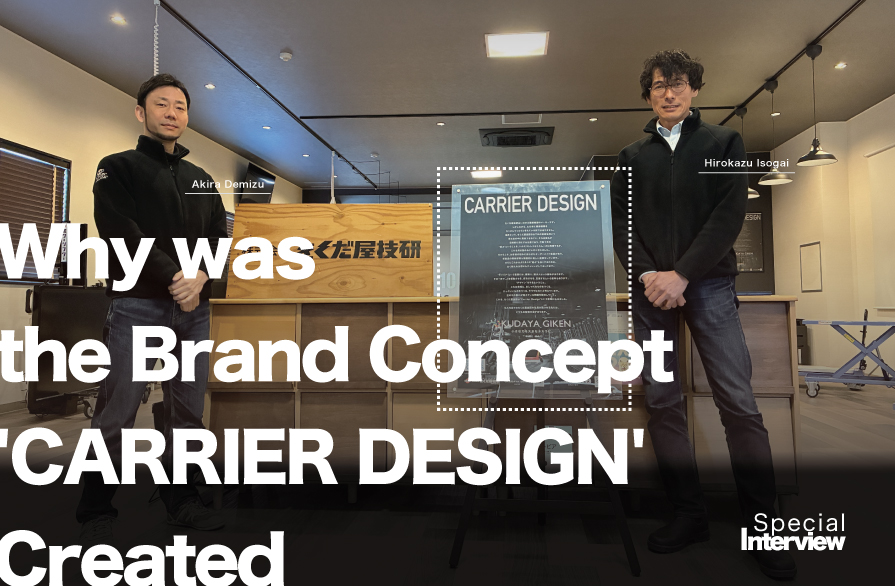
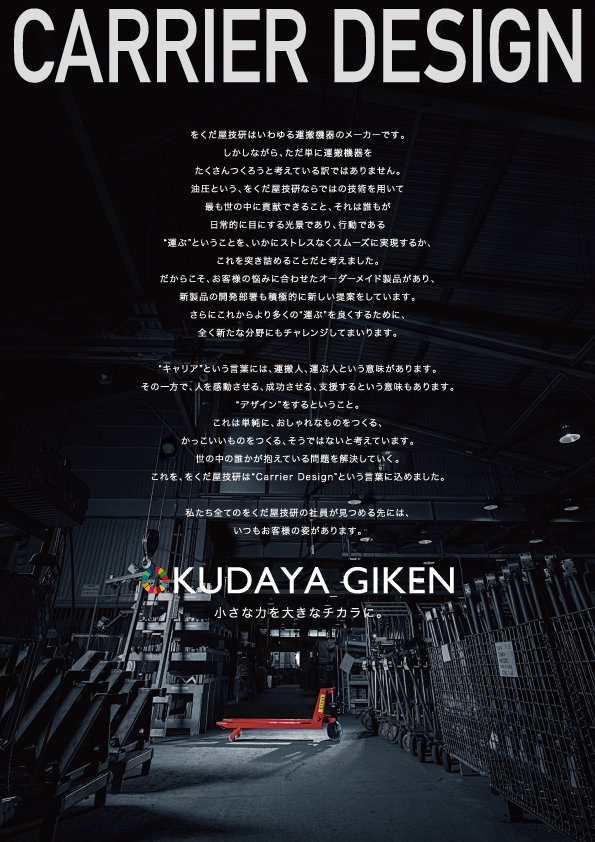
The words that greet you the moment you open Okudaya Giken’s website or brochure. The words displayed on our office walls as a powerful, defining message.
This is our brand concept: “CARRIER DESIGN.”
It is far more than a mere slogan. It is our “compass,” guiding what we carry and the value we provide to society. Yet, the story of when and how these words first came to life remains largely untold.
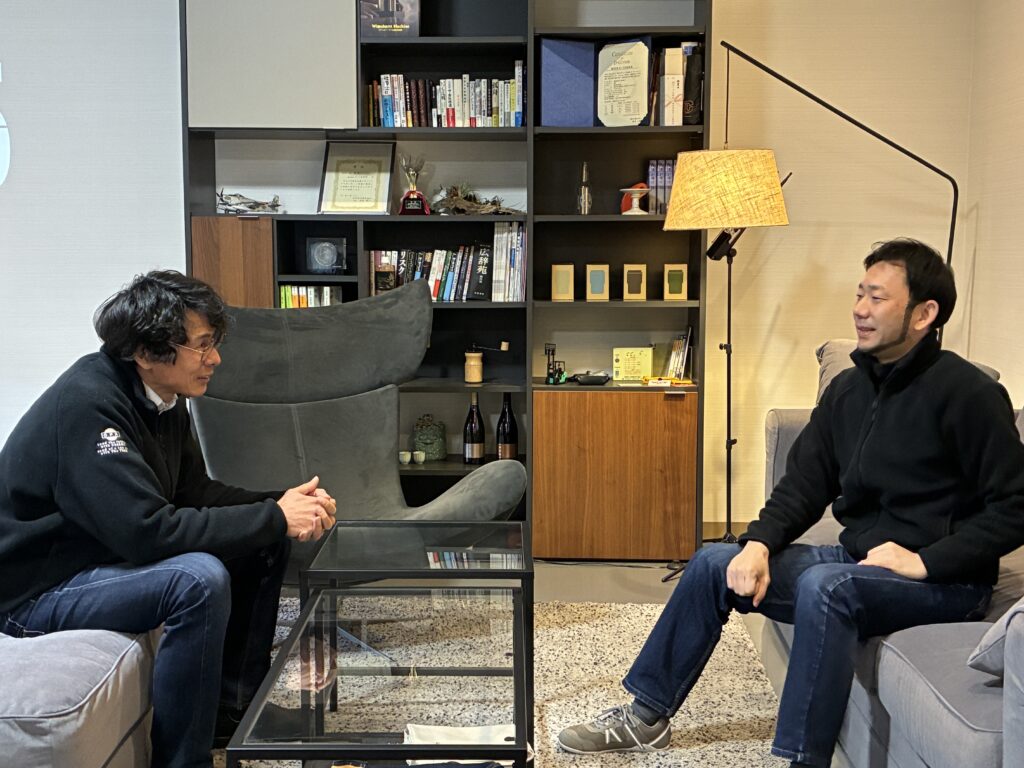
In this special feature, we sit down with General Manager Isogai, one of the architects behind this concept, to go behind the scenes and uncover the true meaning woven into these words.
1. Why We Needed “The Words”
— Before the term “CARRIER DESIGN” was born, what specific challenges were you facing, or what was the “urge for change” like within the company?
At the time, I was in the Sales Department handling our product catalogs, and I was actually looking for ways to completely revamp them.
Meanwhile, Mr. Demizu from the General Affairs Department was in charge of our website. I heard he had received a proposal from a design firm regarding a website overhaul. Their suggestion went beyond just a cosmetic update—it was a proposal to reorganize our entire Visual Identity (VI) as a company.
Mr. Demizu approached me and said, “I believe this could be the catalyst for making the company better, but I can’t do it alone. Will you join me?” That was the starting point of this whole initiative.
I had also felt that while our catalogs, brochures, and website were fine individually, they lacked a sense of unity when viewed as a whole. It made it difficult to communicate what we truly valued as a company. Though we started from different places, it was a moment where our shared desire to “change something” perfectly aligned.
— When the project launched, what was the one thing you were determined to uphold?
The most important thing for me was to never lose sight of the concept of “transporting” (carrying).
Okudaya Giken originally started as a manufacturer of high-pressure air pumps. In the sense of “delivering air to where it can be used,” we have been in the business of “carrying and supporting something” since our very beginning.
Even as our business has evolved over the years, our core philosophy remains the same. That is why I was adamant about staying true to the “transport” axis.
In the end, we settled on the word “CARRIER.” To be honest, it was often confused with “career” (as in one’s professional history), and there were many moments where we had to explain the distinction. Even so, as a word that represents the principles we have followed since our founding, I never considered abandoning this core pillar.
— I imagine there were many candidates on the table. How long did it take to reach this final phrase, and are there any stories about proposals that didn’t make the cut?
As we deliberated, the consensus shifted toward the idea that a phrase with a bit of “white space”—something that doesn’t over-explain—would be more effective. In the end, “CARRIER DESIGN” felt like the most distilled choice. It was the most stripped-down, yet it perfectly captured the essence of our work at Okudaya Giken.
To be perfectly honest, since this was over ten years ago, my memory of the finer details is a bit fuzzy.
However, “CARRIER DESIGN” wasn’t something we had decided on from the start; it was just one of several options proposed to us. I believe there were other choices that were much more direct and easier to understand.
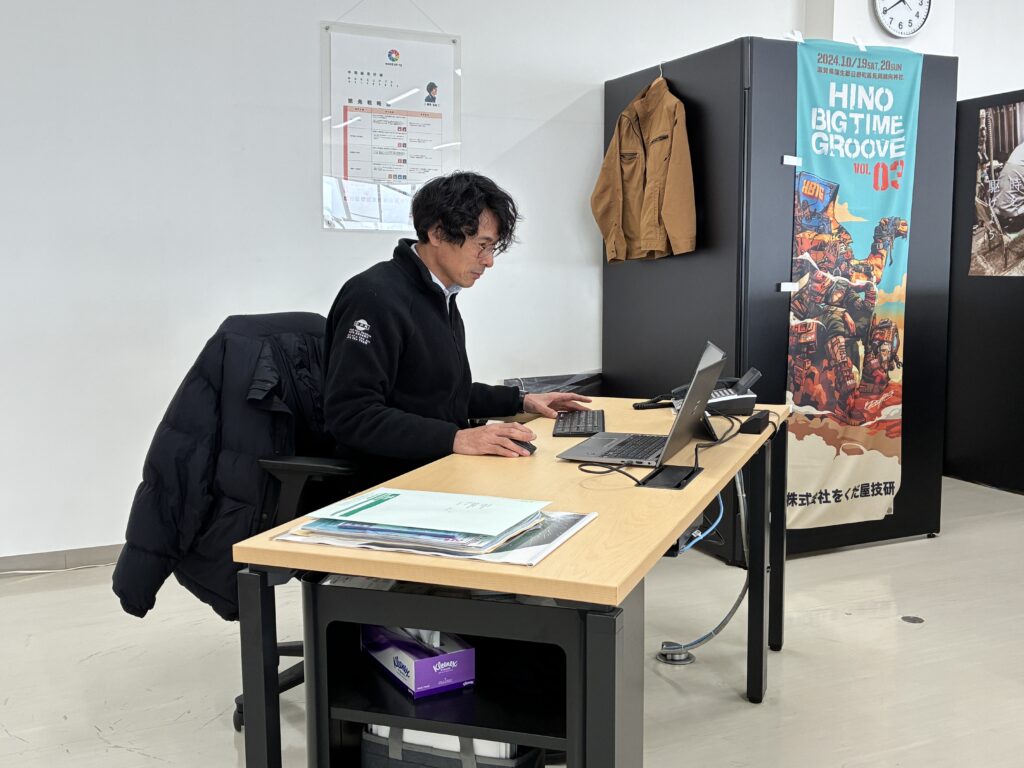
2. The True Intent Behind “CARRIER” and “DESIGN”
— Does the word “CARRIER” hold a meaning beyond just material handling equipment—perhaps something like carrying people’s aspirations or even their “careers”?
I eventually came across the English expression “carry someone through”—which means to support someone and help them navigate a difficult situation. It was a revelation. I realized that by “carrying” objects, we are, as a result, supporting the people and the workplaces that rely on them.
To be honest, I wasn’t thinking that deeply right from the start.
However, as we progressed with this initiative, I found myself reflecting more and more on what the act of “carrying” actually signifies.
— Could you tell us why you chose the word “DESIGN”?
We think about everything—from safety and efficiency to the way people move and the physical strain they endure. In that sense, the expression “Designing the ‘Carry'” felt like the most natural and perfect fit for what we do.
In Japanese, the word “design” is often translated as sekkei (engineering/planning). However, in my view, it is a word closer to “creation” than to mere aesthetics or “looks.”
What is being carried? By whom? In what kind of environment? And how?
— Do you remember the “defining moment” when these two words clicked together for you?
It wasn’t a sudden flash of certainty where I thought, “This is the only one.” Rather, it was a feeling of discovery—like, “Yes, this might be exactly what we’ve been doing all along.” At that stage, I think we were still just testing the waters to see if it would truly resonate.
As we were reviewing several proposals, I felt that combining “CARRIER” and “DESIGN” worked on two levels: it described our products, but it also captured our corporate philosophy.
3. The Pains and Joys of Creation
— What was the biggest challenge you faced during the copywriting process? Were there any points where the team’s opinions diverged?
In branding, there is no such thing as a “correct” answer. Because of that, I was constantly living with a sense of uncertainty, always asking myself: “Will this message truly resonate with people?” or “Is this really getting our point across?”
The most difficult part was figuring out how to verbalize “intangibles”—things like our core philosophy and our corporate attitude.
— When you first unveiled the finished “CARRIER DESIGN” concept within the company, what was the internal reception?
However, there was no pushback either. My impression was that it was quietly and steadily embraced. It felt as though the message simply found its place within everyone, without any unnecessary friction.
We announced it at a company-wide morning assembly and began rolling it out across our posters and catalogs. To be honest, it’s not like there was a massive fanfare or an explosion of excitement.
— Isogai-san, was there a specific moment when this phrase truly “clicked” for you personally?
I believe business cards are the “face” of the company—the first thing we hand to someone outside the organization. When the decision was made to print those words on our cards, it hit me: “This isn’t just a catchy tagline; it’s a commitment that we, as a company, now carry on our shoulders.”
It was when it was officially adopted for our business cards.
4. A Concept Breathing Life into the Everyday
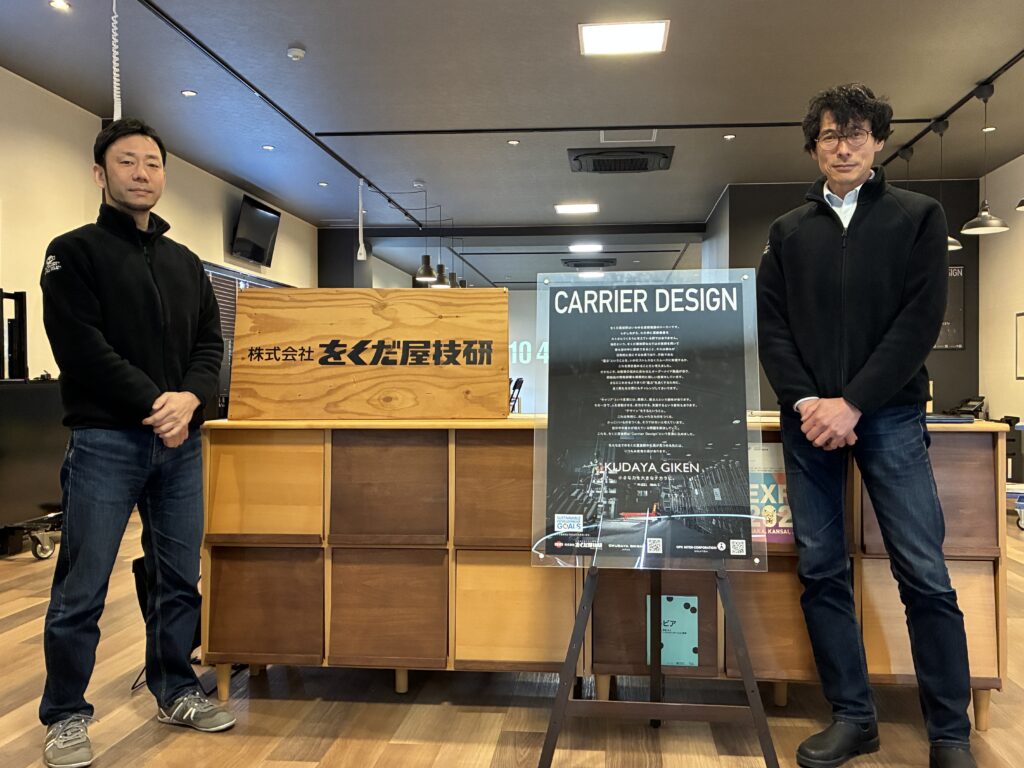
— Seeing the words “CARRIER DESIGN” displayed throughout the office today, how do you feel as one of its creators?
If it can remain at that kind of comfortable distance—a presence that is simply there to be remembered when it is needed—then for me, that is more than enough.
To be honest, I look at them with the simple hope that they reach someone, even in a small way.
It isn’t a phrase I want to shout or forcefully assert. Rather, I want it to be a catalyst for reflection—something that, when caught in the corner of an employee’s eye during their busy day, prompts a moment of thought.
— Since the birth of this concept, have you noticed any shifts in employee awareness, product development, or how you engage with customers?
However, the posters are still up on the walls, and the message continues to be featured in every catalog. Seeing that, I feel that the presence of “CARRIER DESIGN” has gradually become something completely natural. It’s no longer something we “try” to do—it has simply become a part of who we are.
If you are looking for a massive, overnight transformation, I wouldn’t say that happened.
— Are there any specific products or internal actions that you feel truly embody the spirit of “CARRIER DESIGN”?
“Rather than pointing to a specific product, I believe it represents the very essence of how we approach our work at Okudaya Giken.”
5. Where These Words Lead Us
— Ten or twenty years from now, what kind of role do you hope “CARRIER DESIGN” will play at Okudaya Giken?
“I think the words themselves may eventually fade away. But to be honest, I truly hope they endure.”
— How do you hope the new members joining the company in the future will perceive these words?
“I don’t want them to memorize the phrase as if it were a ‘correct answer.’ Instead, I want them to embrace it as something they are free to interpret in their own way.”
— Finally, for you personally, if you were to express “CARRIER DESIGN” as a single “promise,” what would it be?
To me, that is the essence of ‘CARRIER DESIGN.'”
“Moving the goods, and moving progress.
Editor’s Note: After the Interview
Through this interview, it became clear that “CARRIER DESIGN” is far more than just a marketing slogan aimed at the outside world. It is a “living philosophy”—one that actively reshapes the mindset of every employee.
For Okudaya Giken, what were once disconnected dots have now aligned to form a singular, grand path. We look forward to seeing how this path will illuminate the future of logistics in Japan. Here at OKUDAYA CONNECT, we will continue to follow their journey and the ongoing challenge of defining what it truly means to carry the future.
Interview Date: January 2026
In Cooperation With:
Hirokazu Isogai General Manager, R&D Strategy Department
Okudaya Giken Co., Ltd.

Author of this article

Related articles
-
 Imprints of Time by the Pond
 -
The Way We Work — Then and Now: A Look Back Over 25 Years
-
Album I Was Into Back Then: ④⊿(Perfume)
-
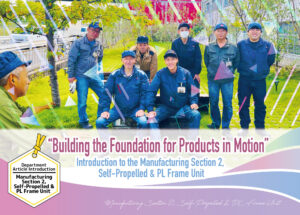
Department Introduction Article –Manufacturing Section 2, Self-Propelled & PL Frame Unit “Building the Foundation for Products in Motion”
-
The Front-Line Legend of the Strongest! The Ultimate Grip Strength Showdown of the Tough Guys!
-
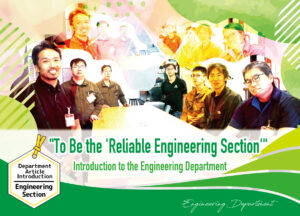
Department Introduction “Production Engineering Section” – “To Be the ‘Reliable Engineering Section'”
-
Building Trust by Staying True to Ourselves ― Interview with Mr. Katsuki, General Manager of Sales Department
-
「 Rock BEYOND Rock 3 」 in Namba Hatch Battle Diary