

"The Origin of Our Manufacturing, Started from the Encounter with Okudaya Giken Co., Ltd. (OPK)"
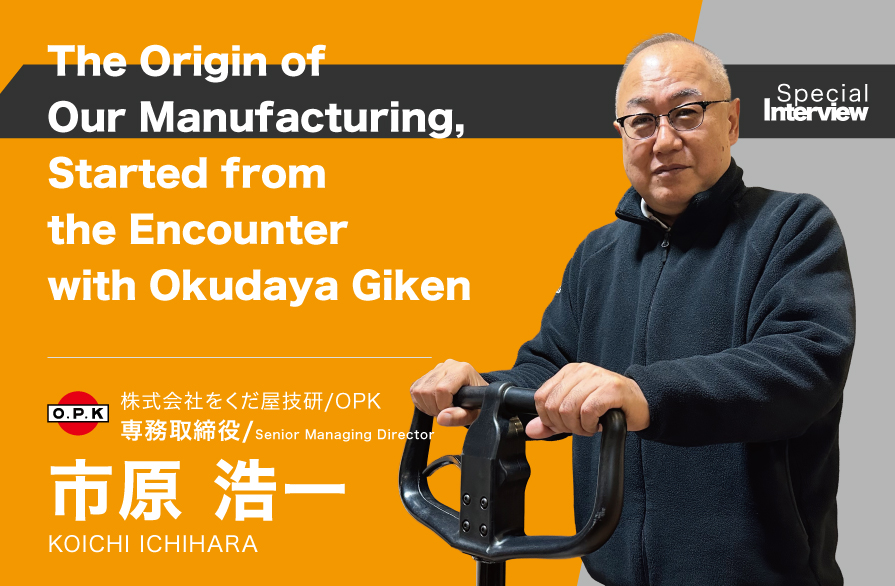
For 40 years, he walked a single path with unwavering dedication. Even from his sickbed, his creativity and ideas never ceased. — From our founder, we continued to learn many things until his very last moment.
— Mr. Ichihara, have you always had a strong interest in manufacturing?
Originally, I dreamed of becoming an aircraft mechanic and even aimed to enter a technical college. Eventually, I went on to study in the Department of Electro-Mechanical Engineering, Faculty of Engineering, at university, where I learned both electronics and mechanics. My interest in manufacturing has remained unchanged since those days.
— Could you tell us about how you first encountered Okudaya Giken?
During my university years, I was very curious and actively pursued anything that caught my interest. Before I knew it, it was already November of my senior year — the final stage of job hunting. While browsing the remaining job postings at the university career center, I happened to come across Okudaya Giken. That was in 1985, and I joined the company as a new graduate. Since then, I’ve spent nearly 40 years here, working my way up from the ground level.
— Did you ever consider changing jobs to another company?
Well, by nature, I tend to devote myself wholeheartedly to whatever I do (laughs). Before I realized it, I had become one of the most senior members of the company.
— Has the atmosphere of the company changed compared to when you first joined?
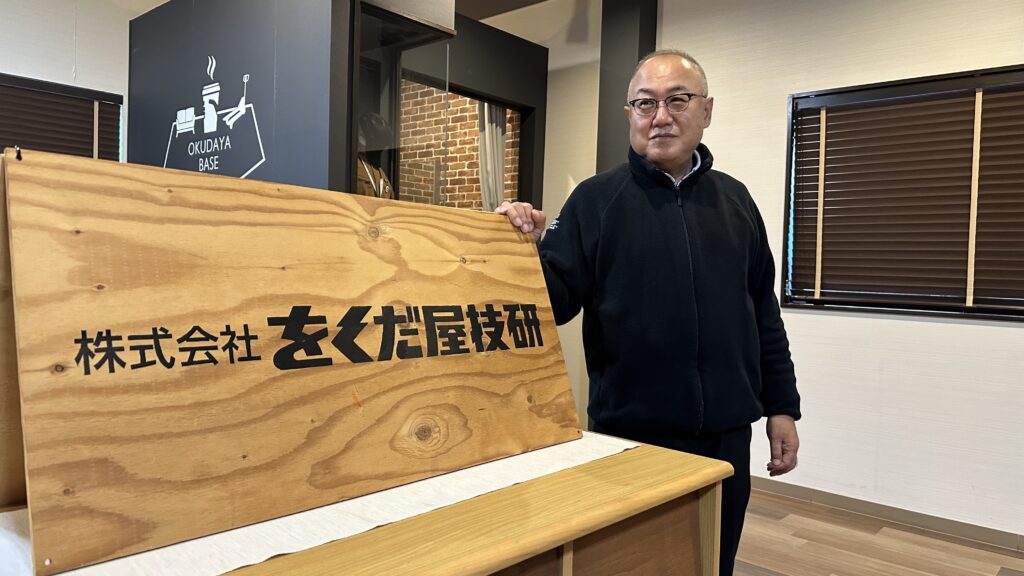
It has changed drastically. When I joined the company, the only building was the one we’re sitting in now for this interview — the rest were mostly single-story warehouse-like structures. The current General Affairs building used to be the main office, and the design team had a small corner within it. I was assigned to the Development Section as part of the technical staff. Under the leadership of Section Chief Ikemoto, we set up equipment with our own hands — the kind you wouldn’t even find at a construction company. We laid air piping and even did high-place work ourselves. People used to joke that it was like “Ikemoto Ironworks.”
— Was the production of catch pallets already underway at that time?
Yes, although we had far fewer staff compared to today, we were producing a surprisingly large number of units. That was before China’s industrial boom, and we were actively exporting to countries such as the United States. When I joined the company, I had the privilege of learning a great deal under our founder, Mr. Genzaburo Okuda, who was the president at the time. From technical guidance to ways of thinking, he was a strict yet inspiring leader. Even while confined to his sickbed, he never stopped thinking creatively. I remember being deeply impressed by how his mind was always active. He truly embodied what it means to be both a manager and an engineer.
— So he was not only a company leader, but also a highly skilled engineer?
Exactly. By the time I returned from China, he had already become Honorary Chairman and his physical condition had declined. Yet he still said, “I want a bath I can get into freely,” and shared many sketches and ideas. As a result, he was granted several patents. His unyielding attitude toward innovation left a lasting impression on me and became one of the greatest lessons I learned from him.
■ The Origin of Manufacturing that Began with the Encounter with Okudaya Giken
Today, we have many convenient tools that prioritize efficiency.
Even so, creativity and inspiration still depend on people.
— We’ve heard that you gained a wealth of experience overseas as well.
One day, out of the blue, the managing director at the time asked me, “Do you have a passport? You’re going to Korea tomorrow.” (laughs) From there, I began accompanying him to various countries, bringing back ideas shared by clients from around the world. I would then pour my efforts into creating design drawings and turning those concepts into finished products.
I’ve worked in many departments — design, inspection, special equipment, production engineering — but I have a particularly strong attachment to development. Naturally, I found myself gravitating toward R&D, taking on roles such as sourcing parts overseas on my own and identifying new technologies to turn into commercial products.
Trips to Europe felt like a kind of “reward,” though back then we didn’t have smartphones, so there were times I nearly got completely lost.
— We also heard you were stationed in China for a long period.
Yes, I spent about four years there on my own. Living and working in the local environment became an irreplaceable experience for me. There were certainly language barriers, but I gradually managed to get by in daily life.
— Speaking of language, Chinese seems quite difficult. Was there a specific moment that pushed you to start learning it?
That was definitely one of the toughest parts. The standard language is Mandarin, or “Putonghua,” but once you go into the regional areas, there are many different dialects, which makes understanding difficult. Mandarin and Cantonese, for example, are quite different.
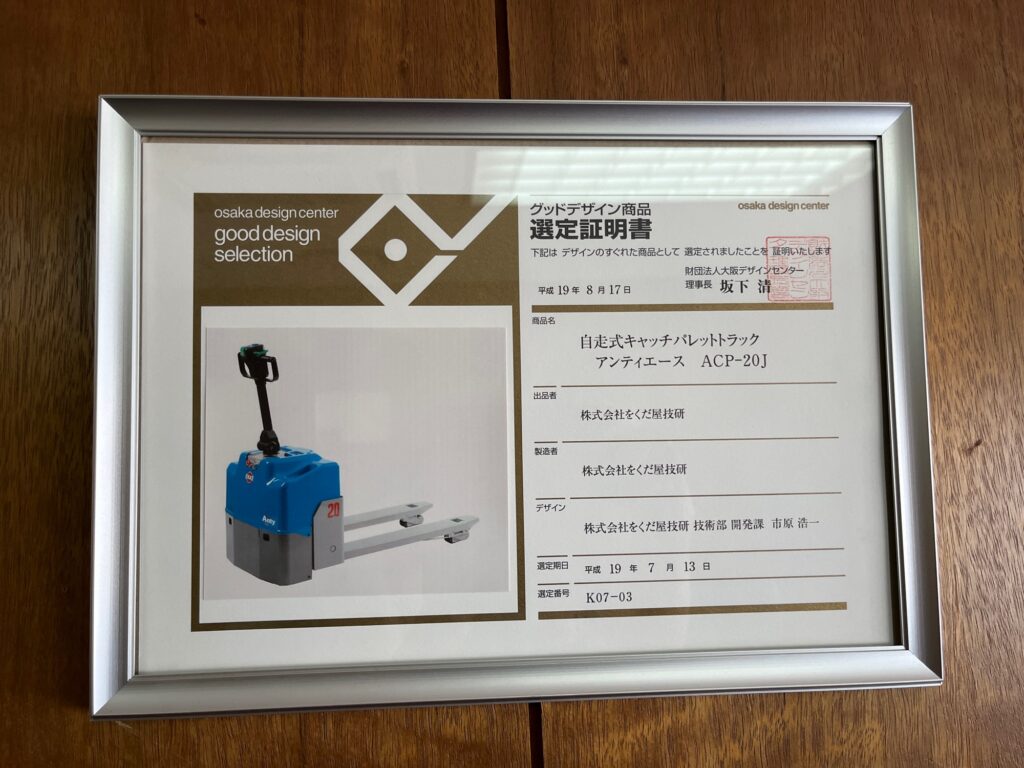
These days, I can speak at a conversational level. What really pushed me to learn was the development of the Catch Pallet Truck and the Anti-Ace(Anty AC). Especially during the model change of the Catch Pallet Truck — we decided to switch to a resin handle and needed to find a supplier for the new parts. I actually searched on Alibaba… (laughs).
Eventually, I found a company in Shanghai. At that time, I didn’t speak a word of Chinese, but I kept visiting them repeatedly on my own. Through that effort, I gradually started learning and was eventually able to communicate.
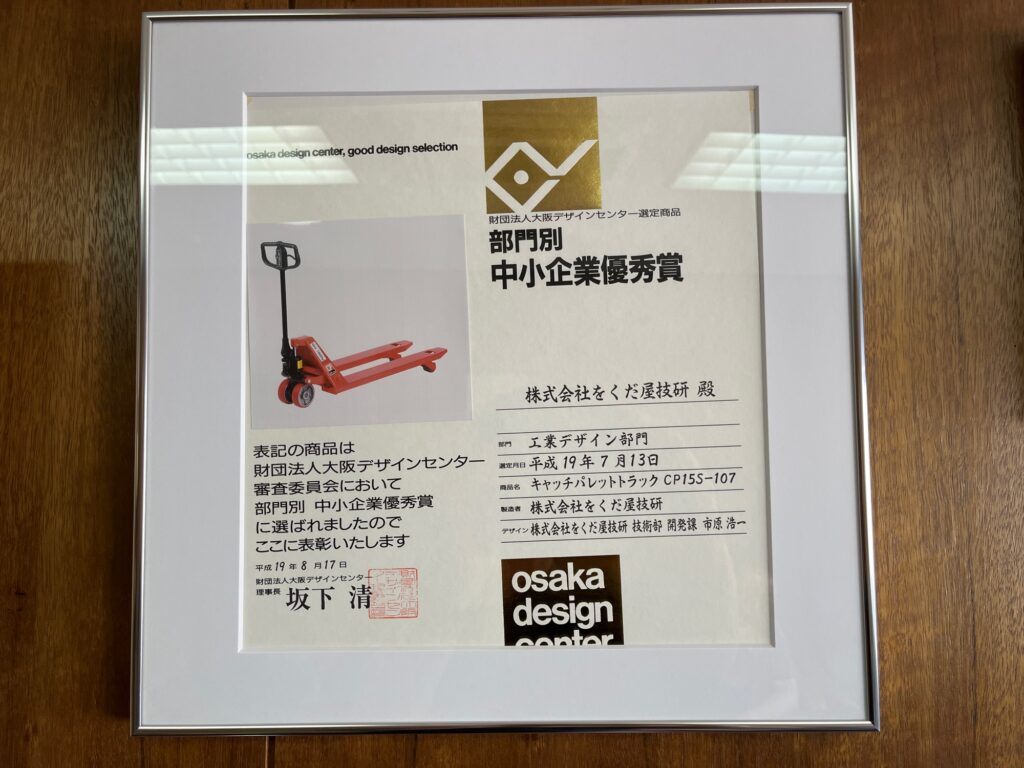
The Catch Pallet Truck we completed through that hard work was later recognized by the Osaka Design Center (ODC), receiving both the ODC Award and the Good Design Award. I believe that was around 2007. Incidentally, the decision to use a round pipe for the handle was a personal preference of Honorary Chairman Genzaburo Okuda — a detail not many people know (laughs).
— It sounds like that project became a memorable one for you.
Yes, it truly did. Our product was even showcased at Crysta Nagahori in Shinsaibashi. Seeing our hard work take shape in that way made me feel proud — it’s one of the projects I look back on and think, “We really accomplished something great.”
— How did the project initially begin?
It all started when one of our sales representatives in Tokyo suggested, “Wouldn’t it be better if the handle were made of resin?” Back then, we didn’t have tools like 3D printers, so we spent money to create a wooden mockup just to visualize and share the concept. In fact, even before that, we didn’t have 3D CAD software, so we shaped the handle out of clay. I remember working with my section chief, molding the clay together, and seriously debating which design looked and felt better.
— Were your university experiences helpful during that time?
I believe so. As an engineering student, I was constantly doing experiments, drawing diagrams, and writing reports every week. It may be hard to imagine now, but we used T-squares for drafting. We’d place the T-shaped wood against the board and draw lines manually, using triangle rulers to get the angles right — it was entirely hand-drawn. Even my graduation thesis was written using a Hitachi word processor! (laughs)
— Do you still use CAD today?
Occasionally. But the hands-on experience I gained during my student years still forms the foundation of how I think and understand structures. Back then, everything was handwritten — with ballpoint pens, no less. If you made a mistake, you had to correct it with white-out. Things are more convenient now, but I don’t think the struggles of that time were meaningless.
— Wouldn’t you say things are more efficient now?
They certainly are. But in the past, we drew every line manually on a
drafting board, and completing a single drawing required both time and creativity. That process often led to more thoughtful design ideas. Nowadays, you can just draw lines on a screen using CAD, but without the right mindset, that convenience can actually reduce efficiency in the end.
If you truly want efficiency, the first step is to think deeply. Only after that should you rely on tools like CAD or AI. That approach leads to personal growth — and ultimately to higher-quality products.
— So you believe the limitations of old tools helped refine essential skills and intuition?
Absolutely. It was tough back then — we often thought, “This is so hard!” — but because we spent time building things carefully, we ended up creating good products. Today, while tasks are more efficient, the final output sometimes has flaws or omissions. Real-world production doesn’t always match what’s drawn on CAD. You might find that parts fit too tightly to move, or realize you need a bit of tolerance. Older engineers had a keen sense for those subtleties.
That sense of “space” or “margin” is something we still need to cultivate today.
— That’s something you can only sense on the shop floor.
Exactly. Even if a drawing looks perfect, it may not work in reality. And even if you explain that, it takes time for someone to understand why. In the past, we used to cut and paste paper drawings to revise the layout. That kind of creative problem-solving and attention to detail is what modern manufacturing still needs.
Robots and modern technologies excel at replication and speed, but they often lack creativity in the process. In Japan, we’ve always valued perseverance and steady progress. Some may say that’s “too much work,” but I believe that kind of careful craftsmanship is the foundation of quality manufacturing.
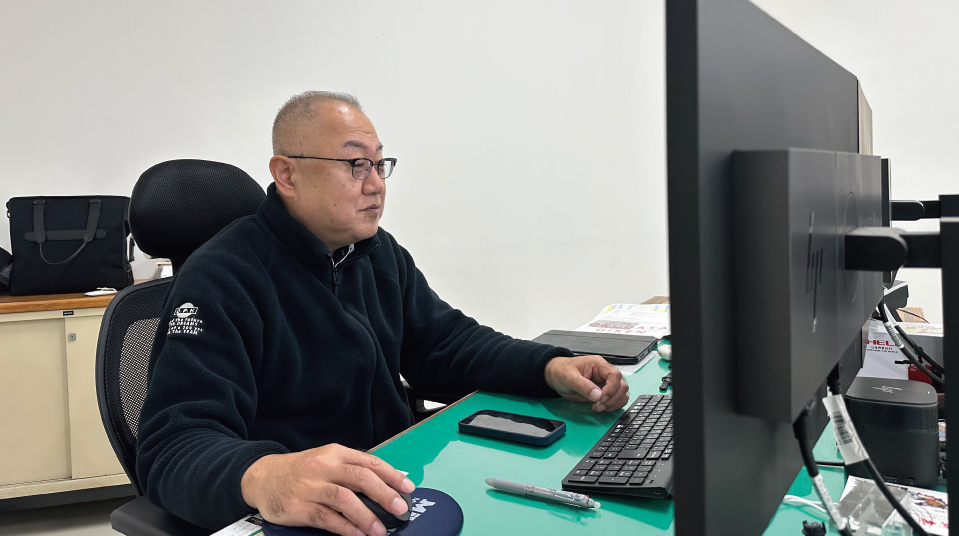
■ Bonds with Our Overseas Group Built Through Hands-on Learning and Working Side by Side
— The owned media “OKUDAYA CONNECT” has launched. How do you feel about deepening communication with overseas group members?
It has long been a dream of mine, and something I’ve seen as a challenge since my time working abroad — to create an opportunity for the entire OPK Group to come together. There are so many things you can only understand by actually being on-site, and even when we try to explain them from Japan, it doesn’t always fully get across.
Even so, our overseas staff continue to work tirelessly behind the scenes for the sake of OPK products. That’s precisely why I believe we need a platform here in Japan to share what’s happening on the ground overseas. I recently visited China and was able to reconnect with many of our members. After all, meeting face-to-face truly lifts the spirit — it gives everyone new energy.
— What impression did you get from the local staff during your visit?
There’s Ms. Su, our Deputy General Manager in China, who has been with us since the very beginning. She once told me, “OPK saved my life.” Whenever problems arise, she’s always on the front lines, quietly working behind the scenes to find solutions.
We had a plan to consolidate our two factories in China, but the process was slow to begin with. However, after several meetings and once everyone agreed, saying, “Let’s do this!” things moved incredibly fast.
What would normally take several months in Japan was completed in just one month. Thanks to the efforts of General Manager Mr. Li, Ms. Su, Mr. Lü, and many others, I was once again reminded of how deeply they understand and care about OPK.
— Are there any cultural traits or memorable episodes unique to China?
One thing you don’t see much in Japan is that in China, when something is accomplished, people give each other hugs — even with senior executives at client companies. It’s completely natural. They’ll even joke, “Have you put on weight lately?” (laughs)
In China, personal relationships mean everything. When we visit, people will travel for hours just to meet us. They’ll say, “I came because you came.” And when Japan is hit by a typhoon or disaster, they’ll call to ask, “Are you okay?” These kinds of bonds — like family — form very naturally over time.
— It sounds like you’ve built a strong sense of mutual trust.
As engineers, drawings are our common language. The rest depends on how we express ourselves. Even if I string together random Chinese words, as long as the feeling comes through, we can understand one another. When we’re on the same wavelength, we can communicate beyond words.
■ A Message We Wish to Share Anew as We Look Toward Okudaya Giken’s 100th Anniversary
— Mr. Ichihara, could you share the values or mottos you hold dear in your work?
If I had to sum it up in two key principles, they would be: “Cherish every encounter with people” and “Always verify things with your own eyes.”
Even during my time overseas and here in Japan, I often went out to eat alone. And in many of those moments, I naturally struck up conversations with the person sitting next to me. Some of those interactions led to new ideas for business or product development. More than anything, the energy and inspiration I’ve gained through meeting people has been incredibly valuable.
The second point — “always verify things yourself” — is just as important. It’s about staying curious, strengthening your ability to think creatively and intuitively, and then turning those ideas into reality. And at the end of that process, I always make it a point to confirm everything with my own eyes. That habit of hands-on involvement has not only helped me grow as a person, but also formed the foundation of my approach to manufacturing.
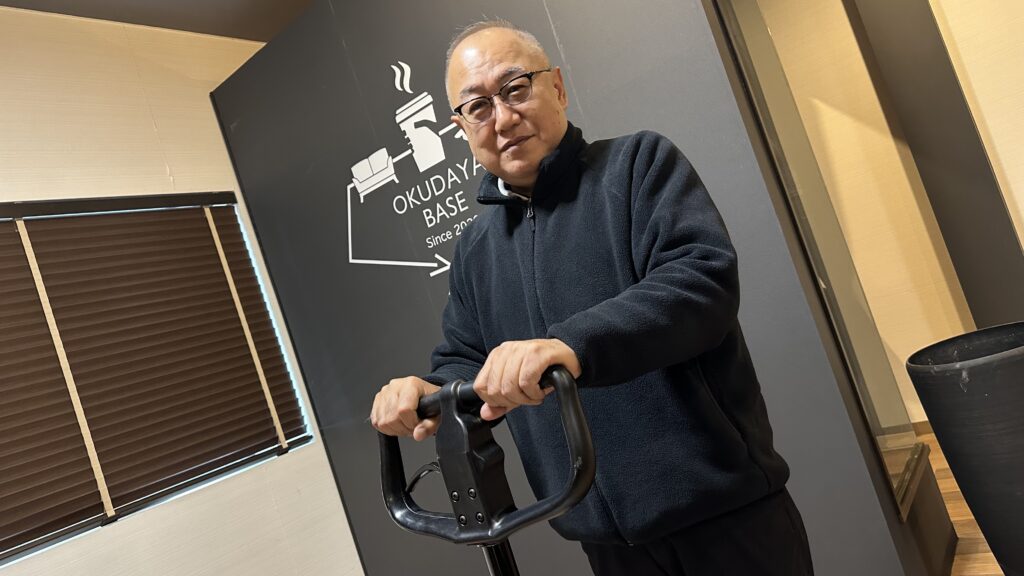
— Lastly, could you share a message with our readers?
Okudaya Giken, along with its group companies overseas, was significantly impacted by the COVID-19 pandemic starting in 2020. In addition, we’ve had to navigate rapidly shifting global dynamics and various legal changes across different countries — a constantly evolving environment.
Despite these challenges, we’ve managed to persevere thanks to the dedication and collaboration of each and every one of our employees. I am sincerely grateful to everyone who has supported us along the way.
Today, our Malaysian subsidiary has surpassed 30 years since its founding, and our Chinese operations will mark their 20th anniversary in 2026. As for the OPK Group as a whole, we are now approaching two major milestones — our 95th and 100th anniversaries.
We still face many challenges ahead, but I firmly believe that when all parts of the OPK Group — across all countries — come together and move in harmony, we will unlock tremendous potential. It is our responsibility, as management, to create the foundation for that unity.
Moving forward, we will continue to face every challenge with perseverance and teamwork, striving together toward even greater growth. We sincerely appreciate your continued support and encouragement in the years ahead.
Interview date: September 2025
Interview support: Okudaya Giken Co., Ltd.
Senior Managing Director: Koichi Ichihara
-
 The Front-Line Legend of the Strongest! The Ultimate Grip Strength Showdown of the Tough Guys!
-
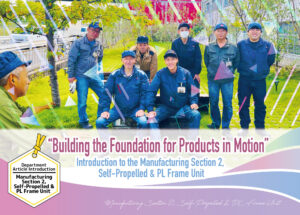
Department Introduction Article –Manufacturing Section 2, Self-Propelled & PL Frame Unit “Building the Foundation for Products in Motion”
Author of this article

Related articles
-
Creating a Workplace Where Everyone Thrives – Okudaya Giken Co., Ltd. (OPK)
-
Building Trust by Staying True to Ourselves ― Interview with Mr. Katsuki, General Manager of Sales Department
-
Tamagawa from Accounting Department—Our Go-To Expo Enthusiast!Her Love for “Myaku-Myaku” And Why She’s Already Enjoyed EXPO 2025 (All 7 Visits!)
-
[OKUDAYA CONNECT Opening Commemoration Special Interview] Special Interview with Director Nobuko Okuda
-
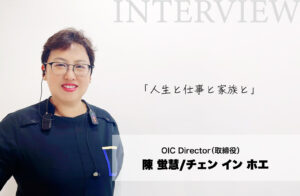
“Life, Work, and Family” – Challenges Abroad, Family Bonds, and a Supportive Heart. –OPK INTER-CORPORATION SDN. BHD. (OIC)
-
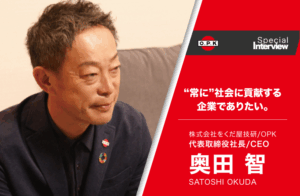
“‘Always’ Strive to be a Company that Contributes to Society. For this, It’s Important to Operate as a United Team.” ─ Okudaya Giken Co., Ltd. (OPK)
-
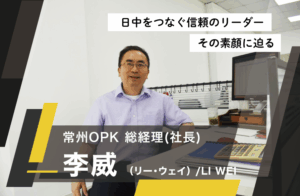
[Key Figure in China] Pursuing the True Face of a Trusted Leader Connecting Japan and China – Changzhou OPK Material Handling Equipment Co., Ltd. (Changzhou OPK)
-
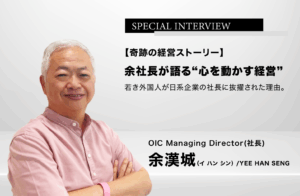
“Management that Moves Hearts – why a Young Foreigner Was Promoted to President of a Japanese Company” – OPK INTER-CORPORATION SDN. BHD. (OIC)