

Visiting the Nara National Museum Special Exhibition "Buddhist Paintings of Nanto" (Part 2)
Thank you for reading this article.
I am Takaki from the General Affairs Department.
This is the second part of ‘A Visit to the Nara National Museum Special Exhibition Buddhist Paintings of Nanto’, picking up from where I left off arriving at the Nara National Museum (Narahaku) in the previous post.
<Special Exhibition Viewing>
Well, thank you for waiting! (Who exactly?)
Let’s head inside the museum.
At the entrance, we were greeted by a hanging banner featuring one of the main highlights of this exhibition, “Sakyamuni Preaching on Vulture Peak (Hokkedo Kompon Mandala)” from the Museum of Fine Arts, Boston.
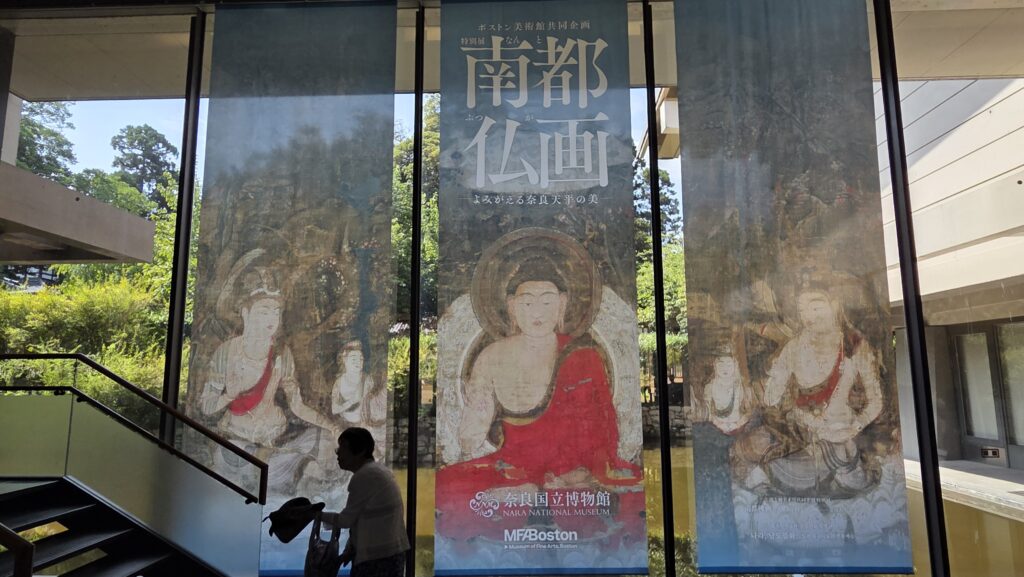
What a magnificent welcome from “Sakyamuni Preaching on Vulture Peak (Hokkedo Kompon Mandala)”!
This was originally created in the Nara period (8th century) as the principal image of the Hokkedo Hall at Todaiji Temple, but it traveled to the United States during the Meiji period and remains there today. It truly feels like a “homecoming.”
If it had stayed in Japan, it would undoubtedly have been designated as a National Treasure.
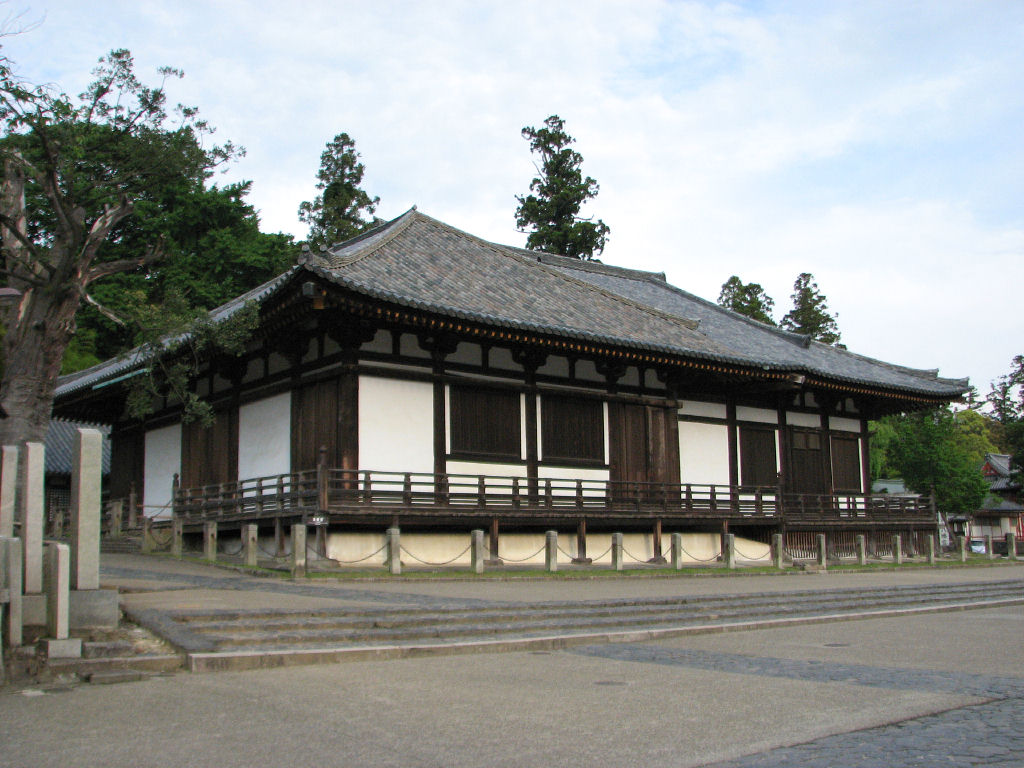
The main hall is one of the few remaining architectural structures from the Nara period.
Now, regarding the name of this special exhibition, “Buddhist Paintings of Nanto”, “Nanto” means Nara, and “Butsuga” refers to paintings related to Buddhism.
As for the content, it is an exhibition that provides a comprehensive overview of Buddhist paintings in Nara from multifaceted perspectives such as art, crafts, and the history of Buddhist studies.
Personally, I felt it was exceptionally well put together and highly rewarding to see.
In addition to Buddhist paintings, numerous related crafts and Buddhist statues are also on display.
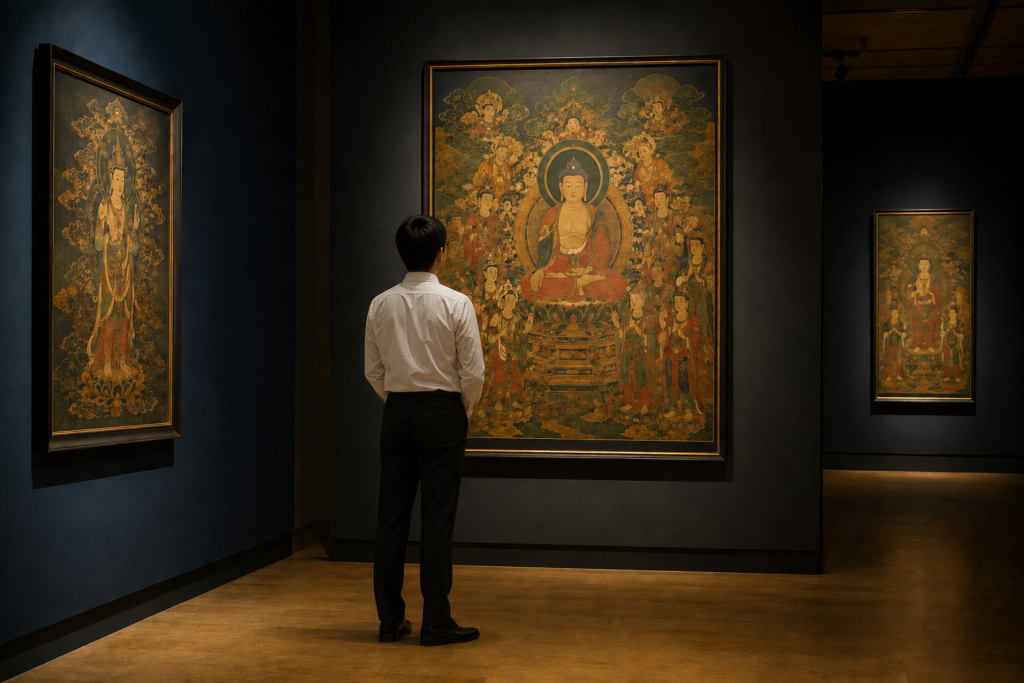
Since it would be impossible to cover everything on display, I will introduce about three pieces that left a strong impression on me.
Due to copyright restrictions, I cannot post images of the artworks, so I would be grateful if you could look them up on your own if you are interested.
・Image of Kichijoten (National Treasure), Yakushiji Temple collection
This is a representative Buddhist painting of the Tenpyo culture (Nara period), the kind you might find in a high school Japanese history textbook.
Although small in size at 53.0 by 31.7 cm, the meticulously painted details are magnificent.
The expression of the fluttering robes is particularly elegant.
It was created as the principal image for an ancient esoteric Buddhist ritual called “Kichijo Keka,” which involves praying for the expiation of sins, protection of the state, and bountiful harvests.
(On display until August 2nd)
・Hokke Mandala (Important Cultural Property), Horyuji Temple collection
Created in the Heian period (12th century), along with various other mandalas from the same period on display, it provides insight into the reception of Tomitsu (Shingon sect) and Taimitsu (Tendai sect) in the temples of Nanto (Nara). This was created as the principal image for the esoteric Buddhist ritual Hokekyoho (Lotus Sutra Ritual), which aimed primarily at praying for increased prosperity and the warding off of disasters. Among works of the same period and format, the one at Tango Matsuodera Temple is quite famous. A Hokke Mandala represents the Lotus Sutra, one of the Mahayana sutras. Although there are various formats depending on the era and sect, this particular piece depicts the scene from the Vision of the Jeweled Stupa chapter of the Lotus Sutra, where a jeweled stupa emerges from the earth surrounded by various bodhisattvas and deities.
・Portraits of the Four Sages (Important Cultural Property / Kencho version and Eiwa version), Todaiji Temple collection
Created in the Kamakura period (13th century) and Nanbokucho period (14th century) respectively, they were used in Buddhist memorial services. These services began during the reconstruction after the burning of Nanto in the Genpei War, aiming to praise the virtues of the Four Sages who contributed to the founding of Todaiji Temple in the Nara period. ‘Miei’ literally means their images or portraits, and all four sages are depicted together in a single scroll. The Four Sages refer to these four figures – Roben, the founder and first head monk of Todaiji; Emperor Shomu, the emperor who issued the edict to construct the Great Buddha; Bodhisena, an Indian monk who served as the officiating priest for the eye-opening ceremony of the Great Buddha; and Gyoki, a high-ranking monk who devoted himself to the construction of the Great Buddha and was actually originally from Sakai City. I believe that Todaiji Temple, in the midst of its reconstruction at that time, honored the Four Sages as great predecessors and contributors to return to its original founding spirit and reaffirm its own identity.
…There were many other fascinating exhibits that caught my eye, but I will wrap it up here for now.
* Reference- Official Exhibition Catalog Commentary
<Post-Exhibition Enjoyment>
As you exit the exhibition room, you will find yourself in a shop selling exclusive event merchandise.

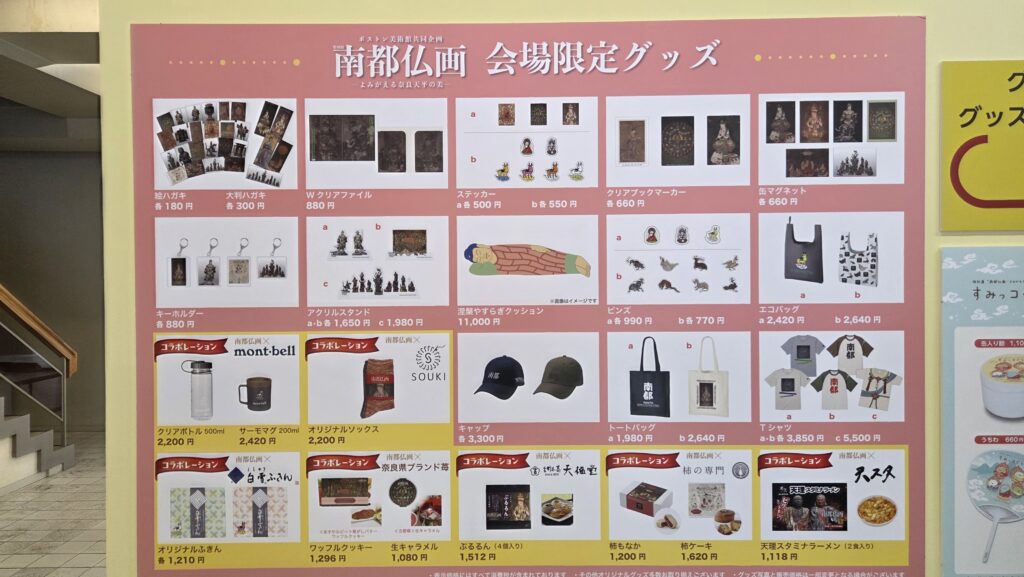
The highlight item is the ‘Nirvana Relaxation Cushion’ inspired by the ‘Nirvana of Sakyamuni’ painting. Priced at 11,000 yen.
It is very amusing and wonderfully made, but for someone like me who feels that ‘It is far too presumptuous to take a nap next to Buddha…,’ just looking at it is more than enough.

Here is a look at some of the other merchandise.
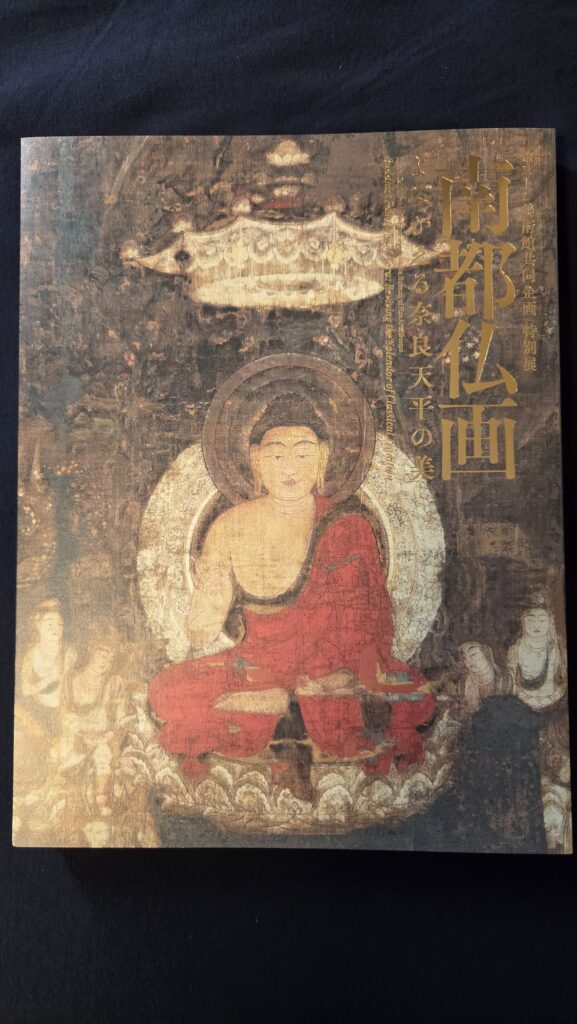
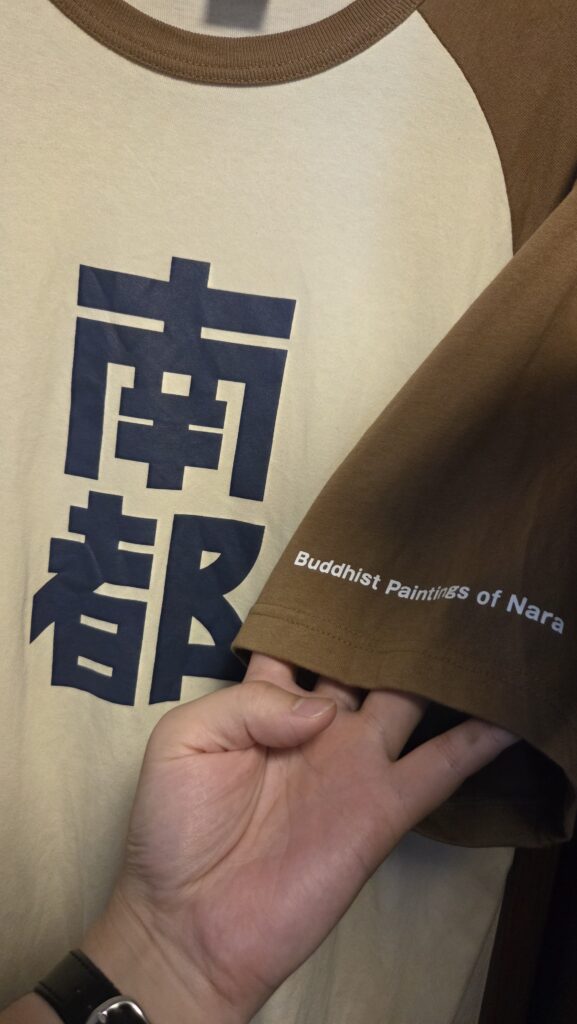
As for myself, I purchased the official exhibition catalog and a Nanto T-shirt. Checking out the exclusive merchandise is certainly one of the pleasures of visiting museum and art gallery exhibitions.
It was just past 1:00 PM when I left the Nara National Museum (Narahaku).
My stay lasted a little over three hours.
<Closing Thoughts>
Lastly, while I don’t have a photo, I enjoyed a local craft dark beer at Kintetsu-Nara Station on my way home. All in all, it was a wonderful day off spent thoroughly enjoying the special exhibition.
How do you all spend your free days off?
I would love to hear all about it!
Thank you very much for reading to the end.
Author of this article:
Okudaya Giken Co., Ltd.
General Affairs Department
Masahiro Takaki
-
 Visiting the Nara National Museum Special Exhibition "Buddhist Paintings of Nanto" (Part 1)
-
Spotlighting the Changzhou OPK Welding Team (Part 2)


Author of this article

Related articles
-
Visiting the Nara National Museum Special Exhibition “Buddhist Paintings of Nanto” (Part 1)
-
“How Many Standard Models Does Okudaya Giken Offer?” We Asked Our Employees.
-
Album I Was Into Back Then:⑥Hi-Fi Shinsho (Sotaisei Riron)
-
Department Introduction: Manufacturing Section 1, Painting Team
-
My Children
-
Zhongyuan Pudu Festival
-
Meet My “Family,” My Pet Cat! (Morita Edition)
-
Introduction to AI Utilization