

Part 2:Visiting the Nara National Museum Special Exhibition "Buddhist Paintings of Nanto" (Part 1)
Thank you very much for opening this article.
I am Takaki from the General Affairs Department.
As indicated in the title, this post is a continuation of the previous one about my visit to the “Nanto Buddhist Paintings” exhibition.
You might be wondering, “Wait, didn’t you already go see it the other day?”
Well, not quite.
<About Exhibition Rotations>
Exhibitions at museums and art galleries are often divided into early and late periods, with exhibits frequently being rotated.
In particular, paintings that are susceptible to the effects of natural light and illumination often have limited display periods to protect the artworks.
So, since my previous visit was for the first half of the exhibition, I have made my way to the Nara National Museum once again to see the second half. It feels a bit like eating hitsumabushi — enjoying a second helping with a fresh change of flavor.
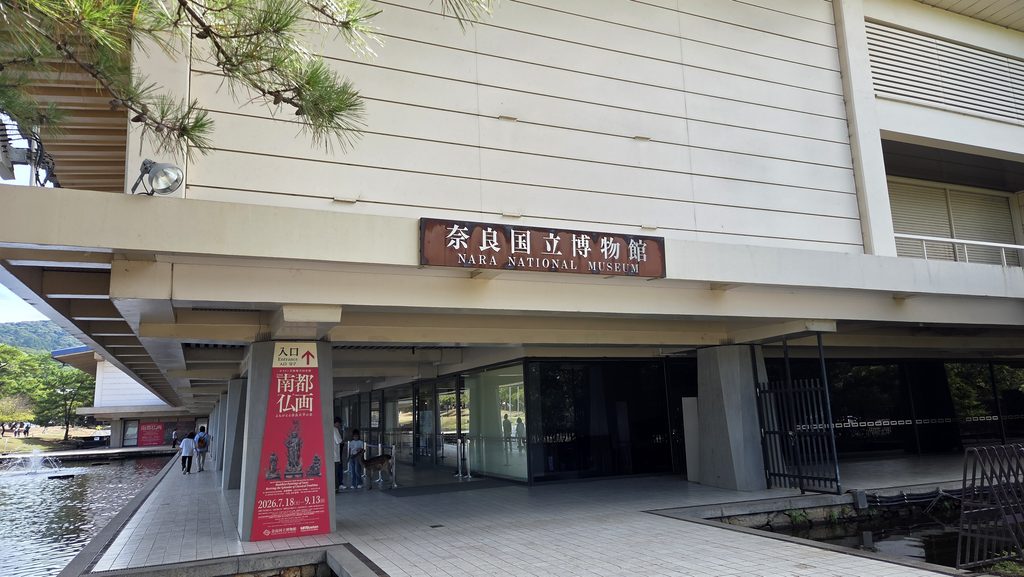
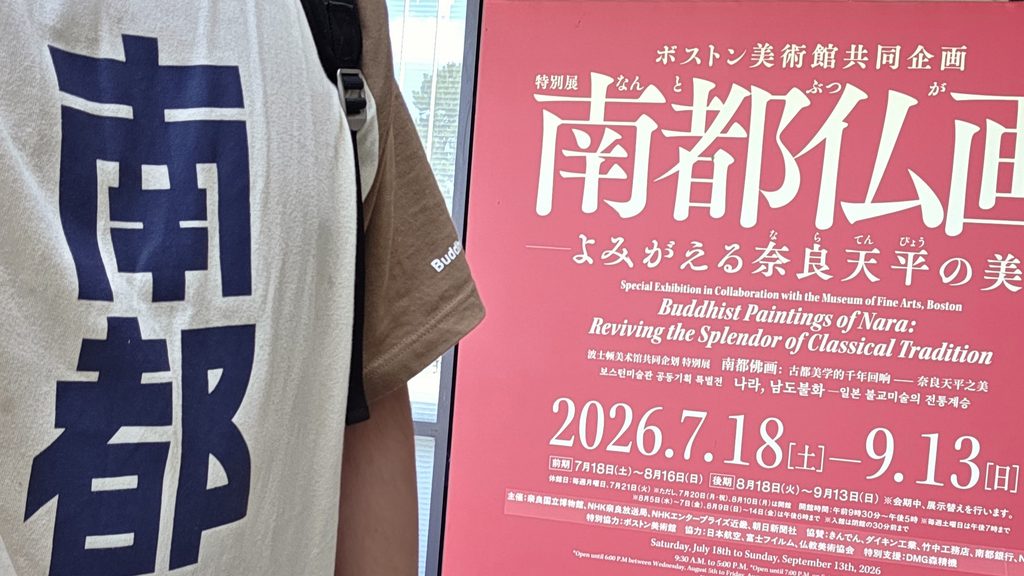
<Viewing the Special Exhibition>
Now, as is customary, photography is prohibited inside the special exhibition rooms.
Due to licensing agreements, images of the artworks are not included in this article.
If you are interested, please be sure to visit the official website of the Nara National Museum.
Once again, just like last time, I will introduce the pieces that left a strong impression on me.
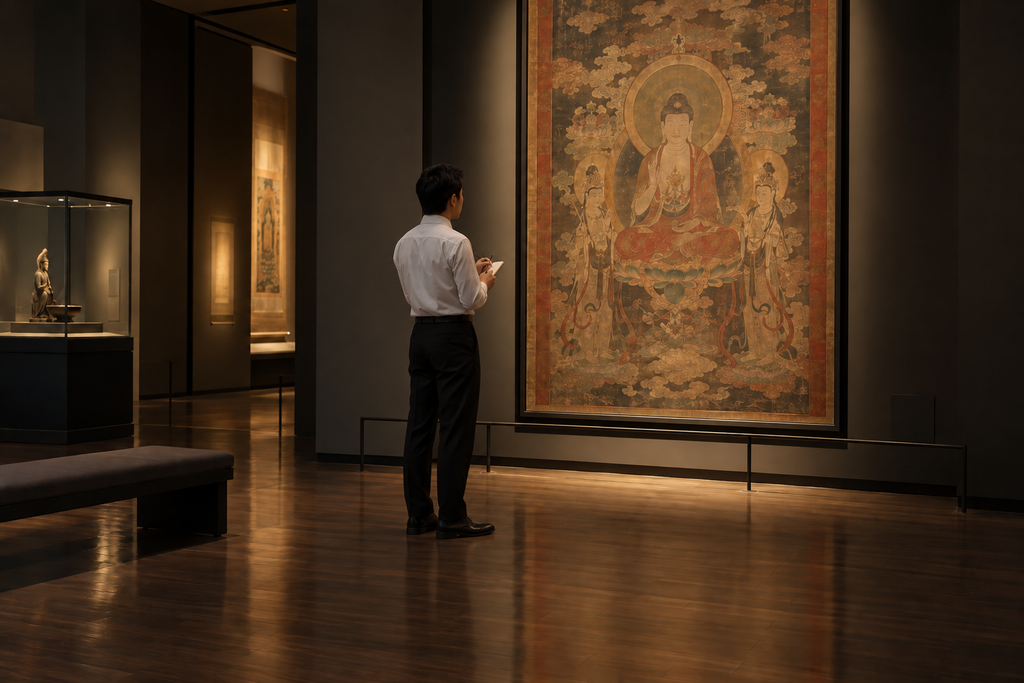
・Jeweled Stupa Mandalas of the Lotus Sutra, Scrolls 5 and 6 (Important Cultural Property), Collection of Tanzan Shrine
Created in the Heian period (12th century), this artwork depicts a jeweled stupa using sutra texts written in gold paint on dark blue paper.
The subdued tones of the deep blue and gold paint, along with the meticulous details, are truly striking.
The purpose of its creation is thought to be to gain the three merits of offering to the Buddha, which are building stupas, copying sutras, and preaching the dharma.
The “Teacher of the Law” chapter of the Lotus Sutra teaches that reading, writing, and preaching the sutra, as well as building a Buddhist stupa where the sutra is kept, serve as offerings to the Buddha.
・Kusha Mandala (National Treasure), Collection of Todaiji Temple
”Kusha” refers to the Kusha-ron (Abhidharmakosha-bhashya), which is a treatise on sectarian Buddhism compiled by the Indian monk Vasubandhu (Bodhisattva Seshin) in the 4th to 5th centuries.
In Japan, the Kusha sect, which studies these teachings, is counted as one of the “Six Schools of the Southern Capital (Nanto Rokushu)” that flourished during the Nara period (8th century).
This mandala was created in the Heian period (12th century). At that time in the Southern Capital, there was an active revivalist movement to return to early Buddhism, leading to a re-evaluation of the Kusha-ron.
Against this background, it is thought to have been created for the purpose of symbolizing and honoring the Kusha teachings.
Furthermore, many similarities can be found between its composition and the way the various deities are depicted and those of the masterpiece of the Tenpyo period (8th century) touched upon slightly in the previous article, the Shaka Ryojusen Seppo-zu (Hokkedo Konpon Mandala) in the collection of the Museum of Fine Arts, Boston.
I felt that the background of its creation might also reflect the exhibition theme, “Reminiscence of the Tenpyo Period.”
…And while there were many other things that caught my attention, I will wrap it up here for today.
※Reference materials include the official catalog commentary, the official website, and other sources.
Now that I have wrapped up my thoughts on my second visit to the exhibition, I will be heading to lunch, but since the text is getting a bit long, I will save the rest for next time!
I also plan to touch a little on OPK and cultural properties.
Thank you very much for reading this far.
Author
Okudaya Giken Co., Ltd.
General Affairs Department
Masahiro Takaki
Author of this article

Related articles
-
 Album I Was Into Back Then:⑦Antidotes(Foals)
 -
Visiting the Nara National Museum Special Exhibition “Buddhist Paintings of Nanto” (Part 2)
-
Visiting the Nara National Museum Special Exhibition “Buddhist Paintings of Nanto” (Part 1)
-
“How Many Standard Models Does Okudaya Giken Offer?” We Asked Our Employees.
-
Album I Was Into Back Then:⑥Hi-Fi Shinsho (Sotaisei Riron)
-
Department Introduction: Manufacturing Section 1, Painting Team
-
My Children
-
Zhongyuan Pudu Festival