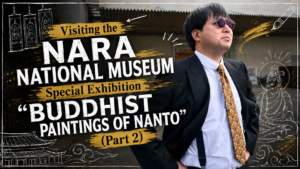


Part 2:Visiting the Nara National Museum Special Exhibition "Buddhist Paintings of Nanto" (Part 2)
Thank you very much for taking the time to read this article.
My name is Takaki from the General Affairs Department.
This article continues from the previous installment (Read Part 1 here), picking up after my visit to the “Nanto Buddhist Paintings” exhibition.
<Lunch>
By the time I left the exhibition hall, it was already past noon, and I was starting to get hungry, so I decided to look for a place to have lunch.
There are several restaurants around the Nara National Museum, but this time I headed toward Kintetsu-Nara Station, which is about a 5–10 minute walk from the museum.
So, I made my way to the area around Kintetsu-Nara Station, known locally as “Kinnara,” where you can also find several lively shopping streets.
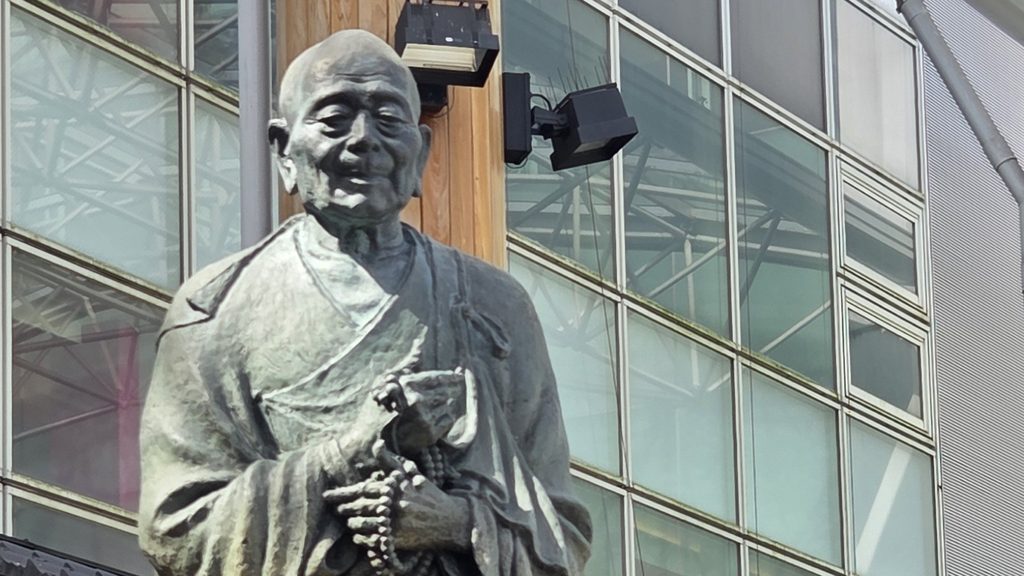
This time, I tried one of Nara Prefecture’s local specialties: Tenri Stamina Ramen.
The restaurant is located in Higashimuki Shopping Street, one of the shopping streets near Kintetsu-Nara Station.
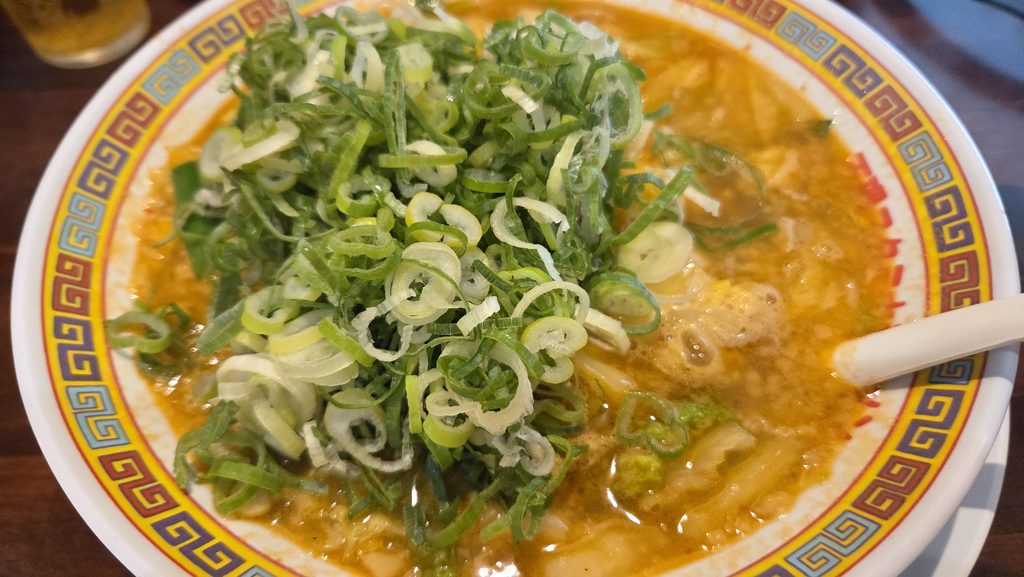
Topped with plenty of stir-fried vegetables, it is a true stamina-boosting bowl of ramen—and one I happen to like quite a lot.
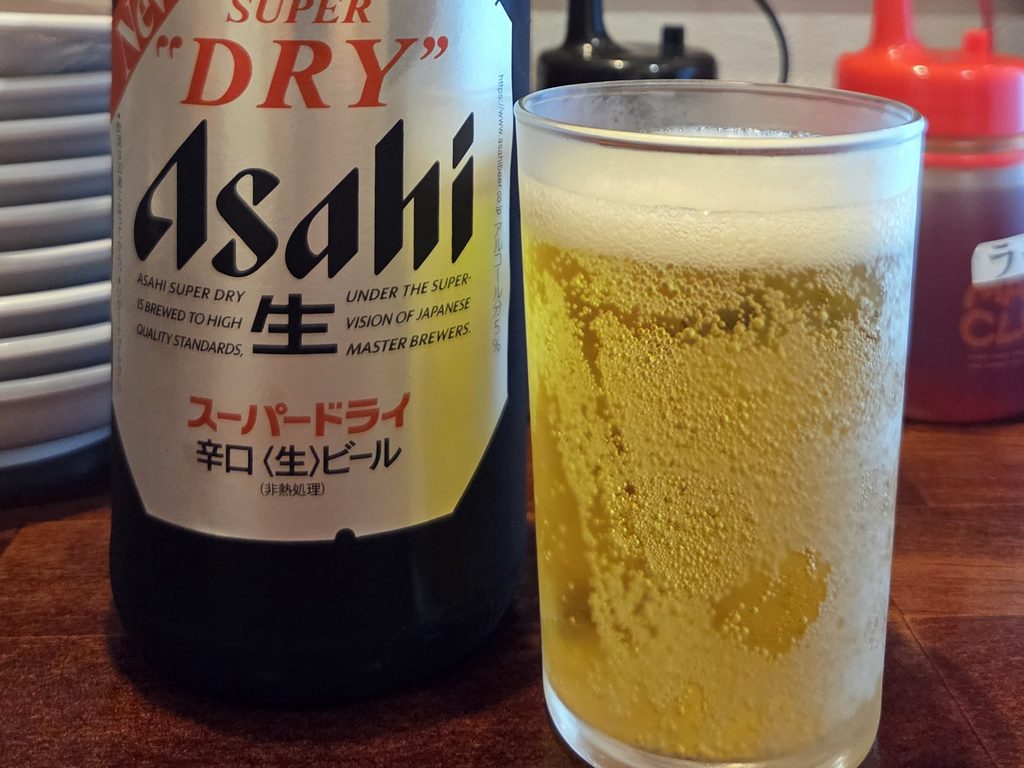
And, of course, a beer. Absolutely irresistible.
<Back to the Nara National Museum — The Buddhist Sculpture Hall>
Feeling re-energized, I wondered what to do next.
And in the end, I headed back to the Nara National Museum.
(You might be thinking, “Wow, he really goes there a lot!”)
If you have a ticket for the special exhibition, you can also enter the adjoining Buddhist Sculpture Hall.
So, I headed to the Buddhist Sculpture Hall for what would be my last visit for a while.
The reason is that the hall will be closed for an extended period from September 14, 2026, until around spring 2028.
The building was originally the Main Exhibition Hall of the former Imperial Nara Museum and is designated as an Important Cultural Property of Japan.
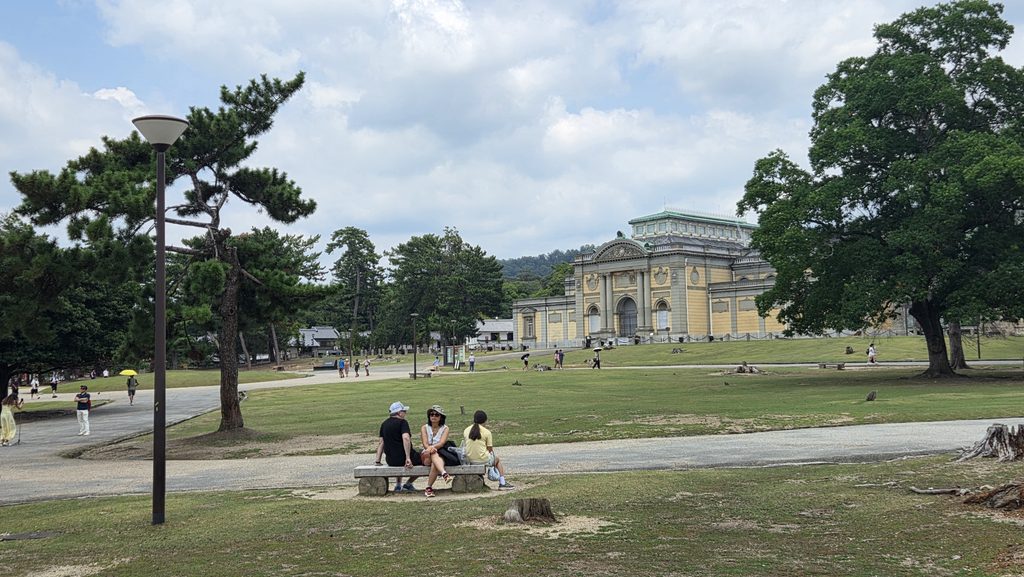
Inside the hall, visitors could view Buddhist statues that had been preserved at temples and shrines in Nara and other parts of Japan.
One of the charms of the Buddhist Sculpture Hall is that, unlike at the special exhibition, you can take your time and enjoy the exhibits at a more relaxed pace.
I actually started drafting some explanations of the exhibits here, but I decided not to include them after all, as it felt like things might get a little too detailed.

By the time I finished looking around the Buddhist Sculpture Hall, it was already close to 6:00 p.m.
I have to say, I felt I had spent a very enjoyable day off.
Now, I could end the article here, but I can already imagine someone saying, “This doesn’t feel very OPK-like!”
So, before wrapping things up, I’d like to share a little story that ties in with OPK.
<OPK and Cultural Properties>
At first glance, OPK and the cultural properties I have written about so far may seem completely unrelated.
In fact, however, that is not necessarily the case.
Our products are used across a wide range of industries, including manufacturing, distribution, and food-related businesses. And sites that handle cultural properties are no exception.
As far as I know, our products are also used behind the scenes at museums and art museums throughout Japan for tasks such as organizing and transporting collections, materials, and other items.
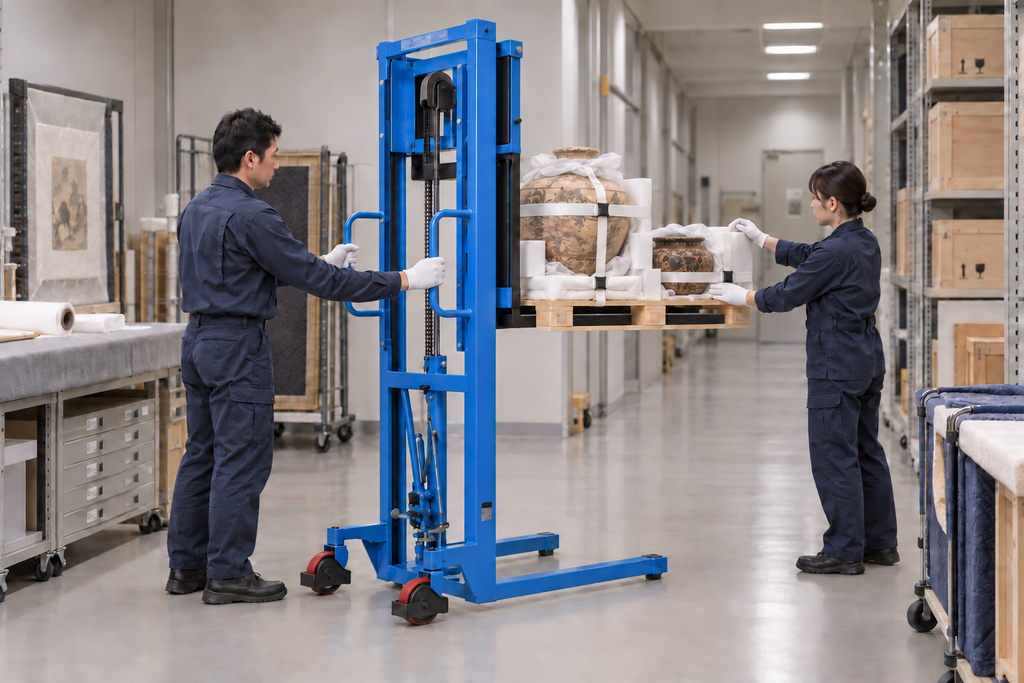
When I was working in the Service Department, I once received an inquiry from a prefectural art museum regarding the battery for our PL-D.
Later, while I was in the Materials Department, I was also responsible for arranging the necessary components for a custom-made unit ordered by a cultural heritage research institute.
As for our flagship product, the Catch Pallet Truck, I remember hearing during my job interview from Chairman Hitoshi Okuda, who held the position at the time, that it had once been used to transport a Buddhist statue from a famous temple in Nara.
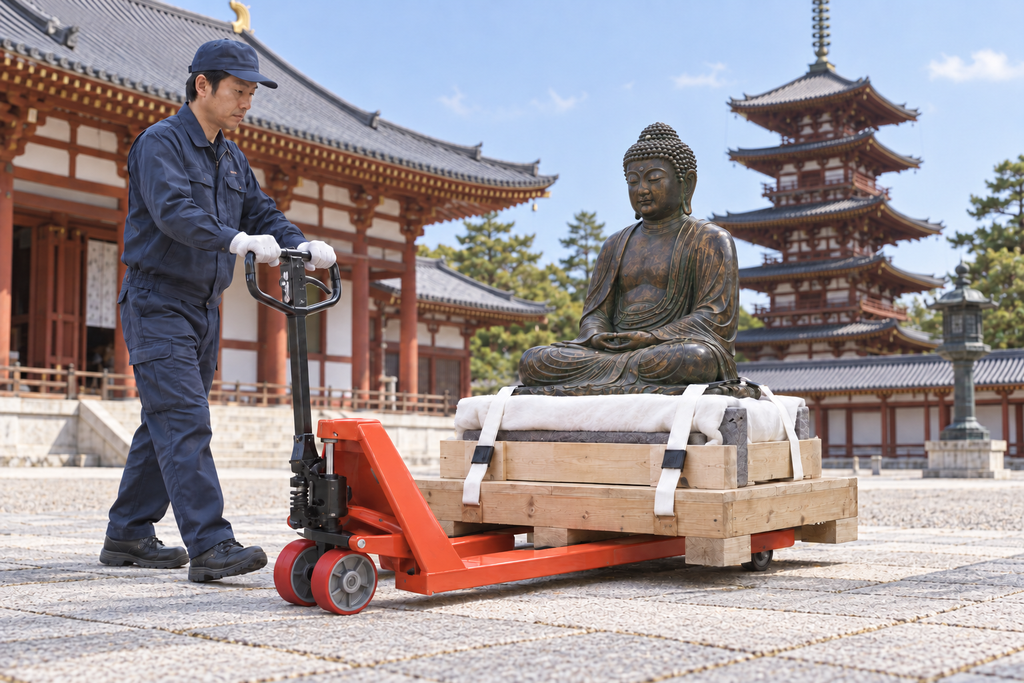
AI really is convenient, isn’t it?
No matter the industry, the need to transport things more safely and with less effort remains the same.
Our products have supported this kind of work in a wide variety of settings.
When it comes to cultural properties in particular, I was reminded once again that our products also play a small part in helping preserve and pass them on to future generations.
So, this ended up becoming quite a long article, but that brings my series on the “Nanto Buddhist Paintings” exhibition at the Nara National Museum to a close.
Thank you very much for reading all the way to the end.
Author
Okudaya Giken Co., Ltd.
General Affairs Department
Masahiro Takaki

Author of this article

Related articles
-
 Full Moon of Mid-Autumn, Together Towards a Beautiful Future
 -
Part 2:Visiting the Nara National Museum Special Exhibition “Buddhist Paintings of Nanto” (Part 1)
-
Album I Was Into Back Then:⑦Antidotes(Foals)
-
Visiting the Nara National Museum Special Exhibition “Buddhist Paintings of Nanto” (Part 2)
-
Visiting the Nara National Museum Special Exhibition “Buddhist Paintings of Nanto” (Part 1)
-
“How Many Standard Models Does Okudaya Giken Offer?” We Asked Our Employees.
-
Album I Was Into Back Then:⑥Hi-Fi Shinsho (Sotaisei Riron)
-
Department Introduction: Manufacturing Section 1, Painting Team